UPSC at 100: Article 315 and the Centenary Explained
The Union Public Service Commission turned 100 on 1 October 2026. PM Modi said recruitment must test why a candidate wants to serve, not just what they know. The history and constitutional framework of the UPSC, explained.
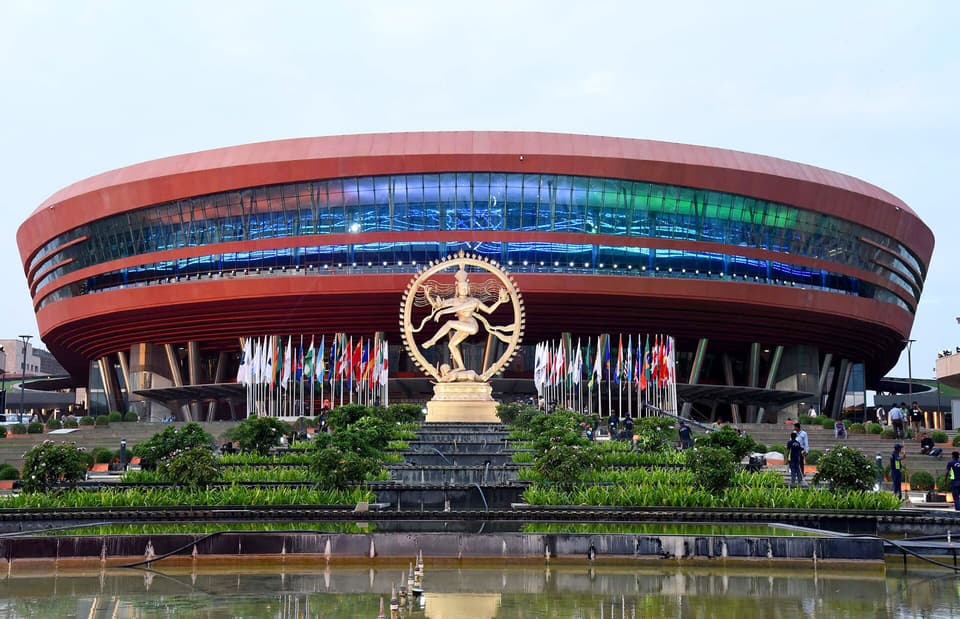
Prime Minister Narendra Modi addressed the Union Public Service Commission (UPSC) centenary celebrations at Bharat Mandapam, New Delhi, on 1 October 2026. The event closed a year of events marking the Commission's founding on 1 October 1926. He said recruitment must test why a candidate wants to serve, not only what they know. He also released a coin, a stamp and a book.
When was the UPSC set up and what happened at its centenary in 2026?
The UPSC began as the Public Service Commission on 1 October 1926, following the Lee Commission's recommendations. It became the UPSC under Article 315 on 26 January 1950. On 1 October 2026, PM Modi closed its centenary year at Bharat Mandapam. He released a commemorative coin, a stamp and a book titled "100 Landmark Judgements".
We must bring such youth into public services who are attracted not by public office, but by public service.
Narendra Modi, Prime Minister of India, UPSC centenary celebrations, Bharat Mandapam, New Delhi (1 October 2026)
What Happened?
Speaking at the event, Modi said the recruitment examination should "not just test what the candidate knows". It should also see "why that youth wants to come into civil services". He described two touchstones for public servants: "nation first" and "citizen first".
The book released at the event compiles 100 court judgments that shaped the policies of the UPSC and state public service commissions. The centenary year began on 1 October 2025.
Why It Matters
The UPSC is one of India's most trusted institutions because it is insulated from day-to-day politics. Its members have fixed terms, removal needs a Supreme Court inquiry, and its expenses are charged on the Consolidated Fund. These safeguards are why its selection is widely seen as merit-based.
The PM's remark about testing motivation feeds an old debate. Reform committees have long discussed aptitude, ethics and age limits in recruitment. Critics worry that judging motivation could add subjectivity to a process valued for its objectivity.
Concept Behind the News: How the Constitution Protects the UPSC
Part XIV of the Constitution, Articles 315 to 323, deals with public service commissions for the Union and the states. The President appoints the UPSC Chairman and members for six years or until age 65, whichever is earlier. Under Article 320, the Commission conducts examinations and advises on recruitment, promotions and disciplinary matters. Its advice is not binding.
Syllabus Connection
- GS-II (Polity): Constitutional bodies; Articles 315-323
- GS-II (Governance): Role of civil services in a democracy; civil service reforms
- GS-IV (Ethics): Foundational values for civil services
- GS-I (Modern History): Evolution of the civil services under British rule
PYQ Connection
CAPF 2024
Question: Under which one among the following Articles of the Constitution of India, a member of a Civil Service, whether of the Union or of a State, seeks protection from unlawful dismissal from service?
- Article 309
- Article 311
- Article 315
- Article 320
Answer: Article 311
Article 311 protects civil servants from dismissal or reduction in rank without an inquiry and a reasonable hearing. Article 315 creates the commissions and Article 320 sets out their functions.
UPSC Prelims 2015
Question: Consider the following statements: 1. The Executive Power of the Union of India is vested in the Prime Minister. 2. The Prime Minister is the ex officio Chairman of the Civil Services Board. Which of the statements given above is/are correct?
- 1 only
- 2 only
- Both 1 and 2
- Neither 1 nor 2
Answer: Neither 1 nor 2
Both statements are wrong. Executive power of the Union is vested in the President under Article 53, not the Prime Minister. The Civil Services Board is chaired by the Cabinet Secretary.
UPSC Prelims 2010
Question: Who among the following Governor Generals created the Covenanted Civil Service of India which later came to be known as the Indian Civil Service?
- Warren Hastings
- Wellesley
- Cornwallis
- William Bentinck
Answer: Cornwallis
Cornwallis organised the Covenanted Civil Service, which later became the Indian Civil Service. He is often called the father of the civil services in India.
UPSC Mains 2017 | GS-II, 15 marks: Initially, Civil Services in India were designed to achieve the goals of neutrality and effectiveness, which seems to be lacking in the present context. Do you agree with the view that drastic reforms are required in Civil Services? Comment. How this news helps: The centenary is a natural hook. Contrast the UPSC's constitutional insulation with debates on lateral entry, motivation testing and performance-based reform.
UPSC Mains 2018 | GS-IV, 10 marks: State the three basic values, universal in nature, in the context of civil services and bring out their importance. How this news helps: Use the PM's "nation first, citizen first" framing alongside integrity, impartiality and dedication to public service.
Visual Explanation: UPSC in the Constitution
Part XIV: Articles 315 to 323 at a glance
| Article | What it provides |
|---|---|
| 315 | Public Service Commissions for the Union and the states |
| 316 | Appointment and term: six years or age 65, whichever is earlier |
| 317 | Removal and suspension; misbehaviour needs a Supreme Court inquiry |
| 318 | Power to make regulations on conditions of service |
| 319 | Bar on further government employment for members after tenure |
| 320 | Functions: conduct exams, advise on recruitment and discipline |
| 321 | Parliament or state legislature can extend functions |
| 322 | Expenses charged on the Consolidated Fund of India |
| 323 | Annual report to the President, laid before Parliament |
Connect the Dots
- 1793 Cornwallis organises the Covenanted Civil Service.
- 1919 Government of India Act provides for a Public Service Commission.
- 1924 Lee Commission recommends setting it up.
- 1926 Public Service Commission set up on 1 October under Sir Ross Barker.
- 1937 Becomes the Federal Public Service Commission under the Government of India Act, 1935.
- 1950 Renamed the Union Public Service Commission on 26 January under Article 315.
- 2026 Centenary celebrations end on 1 October at Bharat Mandapam.
Read More
- Union Public Service Commission: official site (History of the Commission, annual reports and exam notices)
- Election Commission Rift: Dissent, SIR and CEC Removal (Another constitutional body whose independence is in the news)
Exam Takeaway
- Public Service Commission set up on 1 October 1926; Federal PSC in 1937; UPSC from 26 January 1950.
- Term: six years or age 65; removal for misbehaviour needs a Supreme Court inquiry (Article 317).
- UPSC advice under Article 320 is advisory, not binding.
- Expenses are charged on the Consolidated Fund of India (Article 322).
Exam Angle
Prelims can test the articles, the term and the removal process. For Mains, use the centenary to discuss how constitutional safeguards keep recruitment merit-based. Link it to debates on lateral entry, ethics testing and the motivation of civil servants.
Possible Question
Practice Question
Question: With reference to the Union Public Service Commission, consider the following statements: 1. A member holds office for six years or until the age of 65 years, whichever is earlier. 2. The advice of the UPSC is binding on the government. 3. The expenses of the UPSC are charged on the Consolidated Fund of India. Which of the statements given above are correct?
- 1 and 2 only
- 2 and 3 only
- 1 and 3 only
- 1, 2 and 3
Answer: 1 and 3 only
Statements 1 and 3 are correct under Articles 316 and 322. Statement 2 is wrong: the UPSC's advice is advisory, and the government must explain non-acceptance in the report laid before Parliament under Article 323.
Sources & Further Reading
- The Hindu: Must bring youth into public services who are not attracted to public office: PM Modi at UPSC centenary celebrations (1 October 2026)
- Union Public Service Commission: History of the Commission
- Constitution of India, Part XIV, Articles 315-323
- NCERT Class XI, Indian Constitution at Work, Chapter 4: Executive