
Delhi-NCR Pollution: CAQM Orders Curbs Before Peak
CAQM has ordered a pre-emptive pause on construction and 50% office attendance across Delhi-NCR from 5 to 20 November 2026, and CPCB has told states to close industries that have not ordered pollution-control devices.
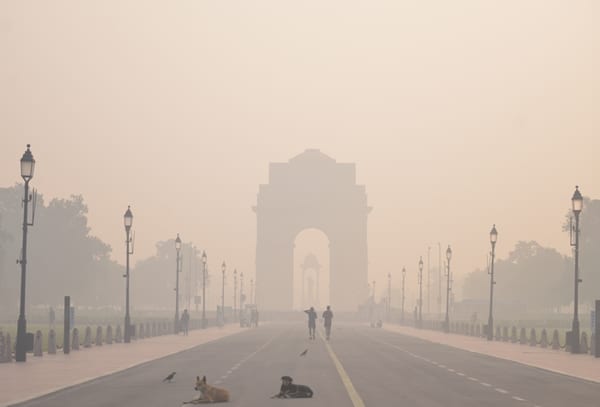
The Commission for Air Quality Management (CAQM) ordered on 30 October 2026 a halt to outdoor construction and demolition in the National Capital Region (NCR). It runs from 5 to 20 November. Government and private offices in Delhi, Gurugram, Faridabad, Sonipat, Ghaziabad and Gautam Buddha Nagar must run at up to 50% staff presence. CAQM acted before the mid-November peak. CPCB separately threatened closure of industries that have not ordered pollution-control devices.
What did CAQM order for Delhi-NCR from 5 to 20 November 2026?
CAQM halted dust-generating construction and demolition across the NCR and capped office attendance at 50% in Delhi, Gurugram, Faridabad, Sonipat, Ghaziabad and Gautam Buddha Nagar. It acted under Section 12 of the CAQM Act, 2021, because November AQI data for 2018 to 2025 showed recurring Severe and Severe+ days.
This recurring pattern underscores the need for timely preventive interventions to minimize emissions before and during the onset of peak pollution episodes.
Commission for Air Quality Management, Order under Section 12 of the CAQM Act, 2021 (30 October 2026)
What Happened?
CAQM issued the order on 30 October 2026 under Section 12 of the CAQM Act, 2021. It covers 5 to 20 November. Reports describe it as the first time the Commission has acted preventively for this window, which has historically brought high pollution.
Dust-generating demolition and outdoor construction must stop across the entire NCR. Railways, metro services, airports, inter-state bus terminals, hospitals, water supply and sanitation, national security and defence work, and projects of national importance are exempt. The restriction still applies to linear public projects such as highways, roads, flyovers, power transmission, pipelines and telecom.
Government and private offices in Delhi, Gurugram, Faridabad, Sonipat, Ghaziabad and Gautam Buddha Nagar must keep up to 50% of staff in the office. The rest work from home. Industrial establishments and essential services are excluded where the arrangement is not feasible.
CAQM analysed daily AQI for November from 2018 to 2025. It found a recurring pattern, with Severe and Severe+ days in early to mid-November. It cites local emissions, farm residue and biomass burning, low wind speed and shallow mixing height as drivers.
On the same day CPCB wrote to the Delhi Pollution Control Committee and the pollution control boards of Haryana, Uttar Pradesh and Rajasthan. Units under CAQM's revised particulate norm of 50 mg/Nm³ that have not placed work orders for air pollution control devices (APCDs) must get show-cause notices. Those that show no proof within five days face closure.
Closed units stay shut until they place orders and submit a credible compliance timeline. Boards must send CPCB weekly status reports, including revocation of consent to operate and electricity disconnection. From 1 November, Delhi Traffic Police also allows only BS-VI, CNG and electric vehicles, plus listed exemptions, to enter and operate in Delhi.
Why It Matters
The order moves policy from reacting to a bad reading towards acting on seasonal history. GRAP stages normally switch on after AQI crosses a band. A fixed window removes that lag. The cost falls on builders, workers and offices, so the exemption list is the real policy design. CPCB's letter targets the other big source, industrial stacks.
The order does not say how the 50% attendance cap will be checked. Industrial compliance is also unclear. Reports say only about 200 of 2,321 identified units had installed or retrofitted devices by 31 July.
Concept Behind the News: CAQM, GRAP and Stack Emissions
CAQM is a statutory body created by the Commission for Air Quality Management in National Capital Region and Adjoining Areas Act, 2021. It replaced the court-appointed EPCA. Its directions bind the NCR State Governments, including Delhi, and it can fix emission norms for industries in the region.
The Graded Response Action Plan (GRAP) links action to AQI bands. Stage I applies when AQI is 201 to 300, the 'poor' category. CAQM revised the GRAP schedule in September 2026. Its first stage targets dust from construction and roads, vehicle emissions and industrial pollution.
APCDs are filtration and emission-control systems fitted to industrial stacks. They include bag filters, electrostatic precipitators, cyclone separators and scrubbers. Bag filters trap dust in fabric. Precipitators use high voltage to collect charged particles. Cyclones use centrifugal force. Scrubbers use liquids.
Syllabus Connection
- GS-III (Environment): air pollution, pollution control and urban air quality
- GS-II (Governance): statutory bodies, Centre-State coordination in the NCR
- Prelims (Environment): AQI, CPCB, NGT, NCAP and international air quality guidelines
- UPPSC PCS Prelims (General Studies): environment, ecology and air pollution
PYQ Connection
UPSC Prelims 2016
Question: In the cities of our country, which among the following atmospheric gases are normally considered in calculating the value of Air Quality Index? 1. Carbon dioxide 2. Carbon monoxide 3. Nitrogen dioxide 4. Sulfur dioxide 5. Methane Select the correct answer using the code given below.
- 1, 2 and 3 only
- 2, 3 and 4 only
- 1, 4 and 5 only
- 1, 2, 3, 4 and 5
Answer: 2, 3 and 4 only
Option (b) is correct. CPCB's AQI covers eight pollutants: PM10, PM2.5, nitrogen dioxide, sulphur dioxide, carbon monoxide, ozone, ammonia and lead. Carbon monoxide, nitrogen dioxide and sulphur dioxide are on that list. Carbon dioxide and methane are greenhouse gases and are not AQI pollutants.
UPSC Prelims 2018
Question: How is the National Green Tribunal (NGT) different from the Central Pollution Control Board (CPCB)? 1. The NGT has been established by an Act whereas the CPCB has been created by an executive order of the Government. 2. The NGT provides environmental justice and helps reduce the burden of litigation in the higher courts whereas the CPCB promotes cleanliness of streams and wells, and aims to improve the quality of air in the country. Which of the statements given above is/are correct?
- 1 only
- 2 only
- Both 1 and 2
- Neither 1 nor 2
Answer: 2 only
Option (b) is correct. Statement 1 is wrong: the CPCB is a statutory body, set up under the Water (Prevention and Control of Pollution) Act, 1974, not by executive order. The NGT was created by the NGT Act, 2010. Statement 2 correctly describes the two roles. Today's CPCB letter to State boards is an example of that enforcement role.
UPSC Prelims 2022
Question: In the context of WHO Air Quality Guidelines, consider the following statements: 1. The 24 - hour mean of PM2.5 should not exceed 15 μg/m³ and annual mean of PM2.5 should not exceed 5 μg/m³. 2. In a year, the highest levels of ozone pollution occur during the periods of inclement weather. 3. PM10 can penetrate the lung barrier and enter the bloodstream. 4. Excessive ozone in the air can trigger asthma. Which of the statements given above are correct?
- 1, 3 and 4
- 1 and 4 only
- 2, 3 and 4
- 1 and 2 only
Answer: 1 and 4 only
Option (b) is correct. Statements 1 and 4 are correct. The 2021 WHO guidelines set 15 μg/m³ for the 24-hour mean and 5 μg/m³ for the annual mean of PM2.5. Ozone can trigger asthma. Statement 2 is wrong because ozone peaks in warm, sunny weather. Statement 3 is wrong because it is fine PM2.5, not coarse PM10, that enters the bloodstream.
UPPSC Prelims 2020
Question: National Clean Air Programme has been launched by the Central Government in the year
- 2018
- 2017
- 2020
- 2019
Answer: 2019
Option (d) is correct. The Ministry of Environment, Forest and Climate Change launched the National Clean Air Programme on 10 January 2019. It was India's first national, time-bound framework for air pollution, aimed at 'non-attainment' cities. GRAP and CAQM orders work alongside it in the NCR.
Visual Explanation: Tighter Stack Norm and Who Is Exempt
Particulate matter emission limit for covered industrial units (mg/Nm³)
| Earlier limit | 80 |
|---|---|
| Revised CAQM limit | 50 |
CAQM order for 5 to 20 November 2026
| Activity | Status |
|---|---|
| Dust-generating demolition and outdoor construction across NCR | Restricted |
| Railways, metro, airports, inter-state bus terminals, hospitals, water supply and sanitation | Exempt |
| National security, defence work and projects of national importance | Exempt |
| Linear public projects: highways, roads, flyovers, pipelines, power lines, telecom | Restricted |
| Government and private offices in Delhi and five NCR districts | Up to 50% staff in office |
| Industrial establishments and essential services where work from home is not feasible | Excluded from office cap |
Connect the Dots
- CAQM studies November AQI for 2018 to 2025 and finds recurring Severe and Severe+ days.
- Its 30 October order under Section 12 stops NCR outdoor construction and demolition from 5 to 20 November.
- Offices in Delhi and five NCR districts run at up to 50% staff presence.
- CPCB tells pollution boards to serve show-cause notices on units with no APCD work order.
- Units with no proof within five days face closure until a credible timeline is accepted.
- Boards report weekly to CPCB on closures, revoked consents and electricity disconnections.
Read More
Read More
- Commission for Air Quality Management (Official site for CAQM orders and directions under the 2021 Act)
- Green Crackers: Supreme Court Rejects Total Firecracker Ban (Earlier DORI article on the legal side of Delhi-NCR air quality)
Exam Takeaway
- CAQM order of 30 October 2026: NCR construction and demolition paused and offices capped at 50%, 5 to 20 November.
- Legal basis: Section 12 of the CAQM Act, 2021. CAQM replaced the court-appointed EPCA.
- Exempt: railways, metro, airports, ISBTs, hospitals, water and sanitation, defence and national-importance projects. Linear public projects are not exempt.
- CPCB letter: five days to show APCD work orders or face closure; norm is 50 mg/Nm³ particulate matter.
- Context: GRAP Stage I at AQI 201 to 300, revised GRAP schedule of September 2026.
Exam Angle
Prelims can test CAQM, GRAP, AQI bands and CPCB's statutory role. Mains can ask whether pre-emptive, calendar-based curbs beat trigger-based ones. Argue that they cut lag but impose costs on workers and builders, and that stack enforcement and farm-residue management matter as much.
Possible Question
Practice Question
Question: With reference to the Commission for Air Quality Management (CAQM), consider the following statements: 1. It was constituted under the CAQM in National Capital Region and Adjoining Areas Act, 2021. 2. Its directions under Section 12 of the Act apply to NCR State Governments, including Delhi. 3. It, and not the CPCB, issued the November 2026 order closing non-compliant industrial units. Which of the statements given above is/are correct?
- 1 and 2 only
- 2 and 3 only
- 1 and 3 only
- 1, 2 and 3
Answer: 1 and 2 only
Statements 1 and 2 are correct. Statement 3 is wrong. CAQM ordered the construction pause and office cap. CPCB issued the separate letter asking boards to close non-compliant industrial units.
Sources & Further Reading
- The Hindu BusinessLine: Delhi-NCR combats air pollution: Govt, private offices capped at 50% capacity from Nov 5-20 (31 October 2026)
- The Hindu: CPCB threatens to shut NCR industries yet to order pollution-control devices (31 October 2026)
- Hindustan Times: Construction, demolition activities halted in Delhi-NCR from Nov 5 to 20 to curb air pollution (30 October 2026)
- Commission for Air Quality Management, official website