Green Crackers: Supreme Court Rejects Total Firecracker Ban
The Supreme Court ruled out a total firecracker ban ahead of Diwali and accepted NEERI's limited relaxation for redesigned "Gen-2" joined crackers. What green crackers are, what the science says, and why Delhi's winter air matters.
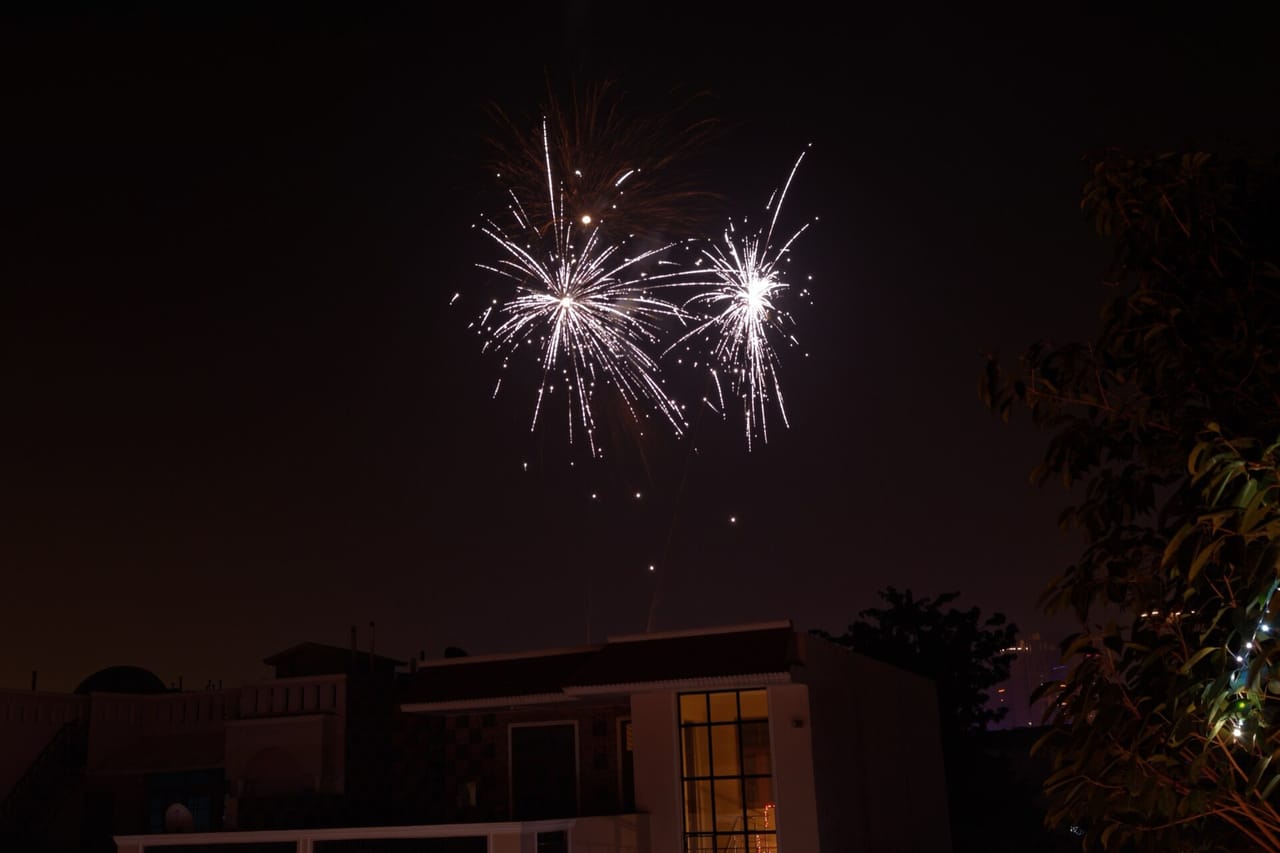
The Supreme Court on 30 September 2026 ruled out a nationwide firecracker ban ahead of Diwali. It accepted CSIR-NEERI's recommendation for a "limited and conditional relaxation". This allows the manufacture of redesigned "Gen-2" joined green crackers that meet noise, emission and safety norms. The Bench said it would not permit 24-hour bursting and would consider fixed time windows.
Did the Supreme Court ban firecrackers for Diwali 2026?
No. On 30 September 2026 the Supreme Court ruled out a total ban and accepted a limited, conditional relaxation proposed by CSIR-NEERI. It allows redesigned "Gen-2" joined green crackers that meet noise, emission and barium limits. The Court will not allow round-the-clock bursting and is considering fixed time windows. NEERI says Gen-2 cuts PM10 and PM2.5 by 45% to 60% in lab tests.
The State shall endeavour to protect and improve the environment and to safeguard the forests and wild life of the country.
Constitution of India, Article 48A (inserted by the 42nd Amendment, 1976)
What Happened?
Green crackers use reworked chemistry to release less particulate matter. NEERI adds zeolite, water-releasing compounds that suppress dust, and metallic composites that improve combustion. Conventional crackers rely on barium nitrate, antimony and other metals linked to respiratory disease.
The relaxation covers the "joined" cracker, a string of crackers burst in sequence. NEERI says the new version bursts five braids a second instead of 25. Noise must stay within 125 dB(AI) or 145 dB(C) peak, and barium-based ingredients are restricted. Only manufacturers licensed by the Petroleum and Explosives Safety Organisation (PESO) can register with NEERI.
The Court has given the Central Pollution Control Board and the Centre more time for barium and decibel tests. NEERI is modelling barium dispersion in Bhopal, Delhi, Kolkata and Chennai, with results due by 15 October.
Why It Matters
The "green" label is misleading. NEERI's own scientists call these "reduced emission fireworks". The 45% to 60% cut is a laboratory figure, not verified in real cities. A smaller cut per cracker can still mean a large total load if bursting rises.
The Centre has argued that green crackers balance festival sentiment, pollution and livelihoods. The cracker industry is largely small-scale and informal, centred on Sivakasi. Critics say Delhi's winter air leaves little room for any extra smoke. Diwali falls in early November, when calm winds and an inversion layer trap pollutants.
Concept Behind the News: PM2.5 and the Right to Clean Air
PM2.5 are particles smaller than 2.5 micrometres that reach deep into the lungs and bloodstream. India's National Ambient Air Quality Standards allow a 24-hour PM2.5 level of 60 micrograms per cubic metre. The WHO's 2021 guideline is far stricter at 15. The Supreme Court has long read the right to a clean environment into Article 21.
Syllabus Connection
- GS-III (Environment): Air pollution, pollutants and their control
- GS-II (Polity): Article 21 and environmental jurisprudence of the Supreme Court
- GS-III (Economy): Small-scale industry and livelihoods (Sivakasi cracker cluster)
PYQ Connection
UPSC Prelims 2016
Question: In the cities of our country, which among the following atmospheric gases are normally considered in calculating the value of Air Quality Index? 1. Carbon dioxide 2. Carbon monoxide 3. Nitrogen dioxide 4. Sulfur dioxide 5. Methane Select the correct answer using the code given below.
- 1, 2 and 3 only
- 2, 3 and 4 only
- 1, 4 and 5 only
- 1, 2, 3, 4 and 5
Answer: 2, 3 and 4 only
India's AQI uses eight pollutants: PM10, PM2.5, NO2, SO2, CO, O3, NH3 and lead. Carbon dioxide and methane are not part of it, so only 2, 3 and 4 apply.
UPSC Prelims 2022
Question: In the context of WHO Air Quality Guidelines, consider the following statements: 1. The 24-hour mean of PM2.5 should not exceed 15 μg/m³ and annual mean of PM2.5 should not exceed 5 μg/m³. 2. In a year, the highest levels of ozone pollution occur during the periods of inclement weather. 3. PM10 can penetrate the lung barrier and enter the bloodstream. 4. Excessive ozone in the air can trigger asthma. Which of the statements given above are correct?
- 1, 3 and 4
- 1 and 4 only
- 2, 3 and 4
- 1 and 2 only
Answer: 1 and 4 only
Statement 1 is correct: WHO's 2021 guidelines set PM2.5 at 15 micrograms per cubic metre (24-hour) and 5 (annual). Statement 4 is correct. Ozone peaks in sunny weather, not inclement weather, and it is PM2.5, not PM10, that enters the bloodstream.
UPSC Mains 2015 | GS-II, 12.5 marks: Does the right to clean environment entail legal regulations on burning crackers during Diwali? Discuss in the light of Article 21 of the Indian Constitution and Judgement(s) of the Apex Court in this regard. How this news helps: This is the exact question. Use the 2018 green cracker framework, the January 2025 NCR extension and the 30 September 2026 order to show the Court balancing Article 21 against livelihoods.
Visual Explanation: How Far India's Standard Is From WHO
PM2.5 24-hour limits (µg/m³): India vs WHO
| WHO 2005 | 25 |
|---|---|
| WHO 2021 | 15 |
| India NAAQS | 60 |
Particulate reduction claimed vs conventional crackers (%)
| Gen-1 green | 30 |
|---|---|
| Gen-2 (low) | 45 |
| Gen-2 (high) | 60 |
Connect the Dots
- 2015 Petitions in the Supreme Court over Delhi-NCR's winter smog.
- Nov 2016 Court suspends firecracker sale licences in Delhi-NCR.
- Oct 2017 Court bans firecracker sales in the region.
- 2018 Framework allows only green crackers; bars barium salts and joined crackers.
- Jan 2025 Ban extended to NCR districts of Uttar Pradesh and Haryana.
- 29 Sep 2026 Delhi announces its Winter Action Plan 2026-27.
- 30 Sep 2026 Court rejects a total ban and allows Gen-2 joined crackers under conditions.
Read More
- Central Pollution Control Board (Daily AQI bulletins and the NAAQS)
- Delhi Pollution Plan: Winter Action Strategy (How Delhi plans for its smog season)
Exam Takeaway
- Green crackers are developed and certified by CSIR-NEERI; makers must hold a PESO licence.
- Gen-2 joined crackers: 5 braids a second instead of 25; noise within 125 dB(AI)/145 dB(C).
- PM2.5 24-hour limit: India 60 µg/m³, WHO 2021 guideline 15 µg/m³.
- Article 48A is a Directive Principle; the right to clean air is read into Article 21.
Exam Angle
Prelims can test NEERI, PESO, AQI pollutants and WHO limits. For Mains, revisit the 2015 GS-II question with the 2026 order. A balanced answer weighs health under Article 21 against Sivakasi's livelihoods and the gap between lab claims and real-world air.
Possible Question
Practice Question
Question: With reference to green crackers in India, consider the following statements: 1. They are developed by CSIR-National Environmental Engineering Research Institute. 2. Their manufacturers must be licensed by the Petroleum and Explosives Safety Organisation. 3. They produce no particulate matter. Which of the statements given above are correct?
- 1 and 2 only
- 2 and 3 only
- 1 and 3 only
- 1, 2 and 3
Answer: 1 and 2 only
Statements 1 and 2 are correct. Statement 3 is wrong: green crackers only reduce particulate emissions, by about 30% for the first generation and 45% to 60% claimed for Gen-2.
Sources & Further Reading
- The Hindu: Gen-2 joined green crackers | Explained (1 October 2026)
- The Tribune: Ahead of Diwali, Supreme Court rules out total ban on crackers; favours balanced approach (30 September 2026)
- WHO Global Air Quality Guidelines (2021)
- Central Pollution Control Board: National Ambient Air Quality Standards (2009)