
Container Manufacturing Promotion Scheme: ₹10,000 Cr Push
The Container Manufacturing Promotion Scheme offers ₹10,000 crore up to FY 2039-40 to build shipping containers in India, with a target of 7.5 lakh TEUs of annual capacity.
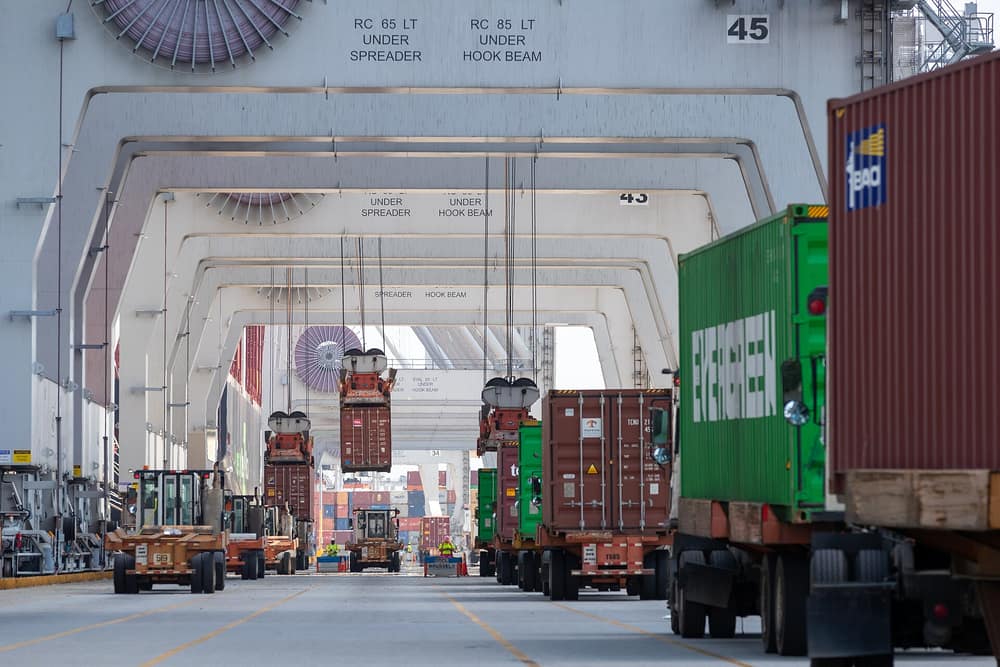
The Union Cabinet has approved a ₹10,000 crore Container Manufacturing Promotion Scheme (CMPS) to build shipping containers in India. The Ministry of Ports, Shipping and Waterways explains it in a PIB backgrounder dated 28 October 2026. The scheme runs up to FY 2039-40. It offers interest support, per-container aid and testing facilities to cut import dependence and raise capacity about ten-fold, to 7.5 lakh TEUs a year.
What does the Container Manufacturing Promotion Scheme offer manufacturers?
CMPS has three supports. Interest Subvention Assistance (₹859 crore) gives 3% a year on eligible term loans. Operational Expenditure Assistance (₹8,891 crore) pays per container sold. Testing and certification (₹150 crore) funds common facilities. Manufacturers need 70% local content through FY 2031-32 and 90% from FY 2032-33.
Shipping containers are standardized steel freight containers that transport cargo across ships, railways and road vehicles without unloading and repacking the goods during transit.
PIB Backgrounder, Ministry of Ports, Shipping and Waterways (28 October 2026)
What Happened?
The Union Cabinet has approved the Container Manufacturing Promotion Scheme with a budgetary outlay of ₹10,000 crore up to FY 2039-40. The Ministry of Ports, Shipping and Waterways explained it in a PIB backgrounder on 28 October. The scheme aims to build a globally competitive container manufacturing ecosystem and cut import dependence.
Interest Subvention Assistance has ₹859 crore and gives a 3% annual subvention on eligible term loans. Greenfield plants need an annual capacity of at least 1,00,000 TEUs. Brownfield expansions must add at least 25,000 TEUs, commissioned within three years of in-principle approval.
Operational Expenditure Assistance has ₹8,891 crore. It pays ₹49,500 per 20-foot container and ₹86,625 per 40-foot container. Specialised 20-foot containers get ₹37,125 to ₹74,250. Manufacturers must meet 70% local content through FY 2031-32 and 90% from FY 2032-33. A further ₹150 crore funds common testing facilities.
PIB says annual capacity should rise about ten-fold, to 7.5 lakh TEUs. It expects about 3,000 direct and over 50,000 indirect jobs. Ancillary industries such as corner castings, specialised steel, wooden frames and paints should also gain.
Why It Matters
Ports and railways move containers, but the scheme implies India's own container-making capacity is small today. A ten-fold rise to 7.5 lakh TEUs suggests current capacity of roughly 75,000 TEUs, though PIB does not state it. Paying per container rewards output, not just plant building. The rising local-content bar pushes steel and component suppliers to localise.
The three components add up to ₹9,900 crore against the ₹10,000 crore outlay. The backgrounder text reviewed does not explain the remaining ₹100 crore or give the Cabinet approval date.
Concept Behind the News: Containers, TEUs and Maritime Trade
Shipping containers are standardised steel boxes built to ISO specifications. They move across ships, railways and road vehicles without unloading the goods. The common sizes are 20-foot and 40-foot, and capacity is counted in Twenty-foot Equivalent Units (TEUs).
As of February 2026, India's maritime sector handled 95% of trade by volume and 70% by value, and contributed 4 to 5% of GDP, per PIB. PIB also cites UNCTAD for the estimate that about 80% of global merchandise trade by volume moves by sea.
CMPS sits within wider moves. A February 2026 MoU created the Bharat Container Shipping Line among SCI, CONCOR, JNPA, V.O. Chidambaranar Port Authority, Chennai Port Authority and Sagarmala Finance Corporation. The Merchant Shipping Act 2025, Coastal Shipping Act 2025 and Indian Ports Act 2025 add legal reform.
Syllabus Connection
- GS-III (Economy): Infrastructure, ports and logistics, and Make in India
- GS-III (Industry): Industrial policy, incentives and local content
- GS-I (Geography): Ports, transport and maritime trade
- Prelims (Economy): Government schemes and infrastructure
PYQ Connection
UPPSC Prelims 2022
Question: Which of the following statement(s) is/are correct about 'Make in India' Programme ? 1. 'Make in India' Programme was launched in the year 2014. 2. It aims at encouraging companies for manufacturing in India and facilitating investment. Select the correct answer from the code given below. Code :
- Both 1 and 2
- Only 1
- Neither 1 nor 2
- Only 2
Answer: Both 1 and 2
Option (a) is correct. Both statements are correct: Make in India was launched in 2014 and aims to encourage manufacturing in India and facilitate investment. CMPS is a Make in India-linked scheme, so this is the direct hook.
UPPSC Prelims 2023
Question: With reference to the 'PM Gati Shakti Scheme', which of the following statement/s is/are correct? 1. The PM Gati Shakti-National Master Plan was launched in 2022. 2. The scheme is built around seven engines (Roads, Railways, Airports, Ports, Mass Transport, Waterways, Logistics Infrastructure), and the National Infrastructure Pipeline (NIP) is aligned with the PM Gati Shakti framework. Select the correct answer using the code given below:
- Neither 1 nor 2
- Only 2
- Both 1 and 2
- Only 1
Answer: Only 2
Option (b) is correct. Only statement 2 is correct. PM Gati Shakti is built around seven engines, including ports and waterways, and the National Infrastructure Pipeline is aligned to it. The National Master Plan was launched in October 2021, not 2022.
CAPF 2024
Question: Which of the following statements with regard to National Logistics Policy (NLP) is NOT correct?
- NLP was launched in 2022
- NLP would improve the competitiveness of Indian goods
- NLP would enhance economic growth and increase employment opportunities
- NLP would provide an opportunity for deleveraging balance sheets and providing fiscal space for investment in new infrastructure assets
Answer: NLP would provide an opportunity for deleveraging balance sheets and providing fiscal space for investment in new infrastructure assets
Option (d) is correct. The National Logistics Policy was launched in 2022 to improve competitiveness and growth. Option (d) describes asset monetisation and balance-sheet deleveraging, which is not what the policy provides, so it is the incorrect statement.
CDS 2023
Question: What does India's "Blue growth" refer to?
- Upgradation of Indian Air Force
- Discouraging farmers from using pesticides
- A long-term strategy to support sustainable growth in the marine and maritime sectors
- Socio-economic empowerment of India's blue collar workers in the unorganized sector
Answer: A long-term strategy to support sustainable growth in the marine and maritime sectors
Option (c) is correct. Blue growth means a long-term strategy to support sustainable growth in the marine and maritime sectors. It fits the scheme's aim of building a maritime manufacturing base.
UPSC Prelims 2023
Question: Consider the following pairs: Port-Well known as 1. Kamarajar Port : First major port in India registered as a company 2. Mundra Port : Largest privately owned port in India 3. Visakhapatnam Port : Largest container port in India How many of the above pairs are correctly matched?
- Only one pair
- Only two pairs
- All three pairs
- None of the pairs
Answer: Only two pairs
Option (b) is correct. Kamarajar Port was the first major port registered as a company, and Mundra is the largest privately owned port, so pairs 1 and 2 are correct. Jawaharlal Nehru Port, not Visakhapatnam, is the largest container port, so pair 3 is wrong.
UPSC Prelims 2009
Question: In India, the ports are categorized as major and non-major ports. Which one of the following is a non-major port?
- Kochi (Cochin)
- Dahej
- Paradip
- New Mangalore
Answer: Dahej
Option (b) is correct. Dahej in Gujarat is a non-major port. Kochi, Paradip and New Mangalore are major ports under the Ministry of Ports, Shipping and Waterways.
CAPF 2022
Question: Consider the following statements about the seaports in India: 1. There are 4 major and 25 minor seaports in India. 2. The major ports are under the administrative control of the Ministry of Ports, Shipping and Waterways. 3. The minor ports are under the jurisdiction of respective State Maritime Board/State Government. Which of the statements given above is/are correct?
- 1, 2 and 3
- 3 only
- 1 and 2 only
- 2 and 3 only
Answer: 2 and 3 only
Option (d) is correct. India has 12 major ports and about 200 non-major ports, so the "4 major and 25 minor" count in statement 1 is wrong. Major ports are under the Ministry of Ports, Shipping and Waterways and minor ports under State bodies, so 2 and 3 are correct.
CAPF 2021
Question: Which one of the following is the only riverine major port in India?
- Mormugao
- Deendayal
- Kolkata
- Paradip
Answer: Kolkata
Option (c) is correct. Kolkata is the only riverine major port in India, located on the Hooghly. Mormugao, Deendayal and Paradip are coastal ports.
CDS 2025
Question: Consider the following statements with reference to location of Major Ports in India: 1. Deendayal Port is situated at the head of Gulf of Khambhat. 2. Cochin Port is situated at the head of Vembanad Kayal. 3. Mormugao Port is situated at the entrance of the Zuari estuary. 4. Paradip Port is situated in the Godavari delta. Which of the statements given above are correct?
- 1 and 2
- 1 and 3
- 2 and 3
- 3 and 4
Answer: 2 and 3
Option (c) is correct. Deendayal Port is at the head of the Gulf of Kutch, not Khambhat, so statement 1 is wrong. Cochin is on Vembanad Kayal and Mormugao at the Zuari estuary, so 2 and 3 are correct. Paradip is in the Mahanadi delta, not the Godavari delta.
Visual Explanation: Where the ₹10,000 Crore Goes
CMPS outlay by component (₹ crore)
| Interest Subvention Assistance | 859 |
|---|---|
| Operational Expenditure Assistance | 8891 |
| Testing and certification | 150 |
Operational Expenditure Assistance per container
| Container type | Assistance per container |
|---|---|
| 20 ft container | ₹49,500 |
| 40 ft container | ₹86,625 |
| 20 ft specialised container | ₹37,125 to ₹74,250 |
Connect the Dots
- Cabinet approves CMPS with a ₹10,000 crore outlay up to FY 2039-40.
- Manufacturers build greenfield plants of 1,00,000 TEUs or expand by 25,000 TEUs, with 3% interest subvention.
- Plants make containers to global standards with at least 70% local content.
- Each eligible container sold earns Operational Expenditure Assistance, such as ₹86,625 for a 40-foot unit.
- Common facilities test and certify containers, backed by ₹150 crore.
- Capacity rises to 7.5 lakh TEUs, imports fall and steel, paint and component makers gain.
Read More
Read More
- PIB Backgrounder: Container Manufacturing Promotion Scheme (Official source for every scheme figure in this article)
- Make in India Outpaced Peers in a Harsher Trade Decade (Previous DORI article on Make in India)
Exam Takeaway
- CMPS: ₹10,000 crore up to FY 2039-40, under the Ministry of Ports, Shipping and Waterways.
- Three supports: ISA ₹859 crore at 3%, OEA ₹8,891 crore per container, testing ₹150 crore.
- Local content: 70% through FY 2031-32 and 90% from FY 2032-33.
- Target: about ten-fold capacity, to 7.5 lakh TEUs; 3,000 direct and 50,000 indirect jobs.
- Context: Bharat Container Shipping Line MoU (February 2026), Sagarmala, PM Gati Shakti and the National Logistics Policy.
Exam Angle
Prelims can test scheme features, ports and the logistics policies around them. Mains can ask whether output-linked incentives build lasting manufacturing. Argue that per-container aid and a rising local-content bar can work, but only if steel supply, port demand and global prices stay supportive.
Possible Question
Practice Question
Question: With reference to the Container Manufacturing Promotion Scheme (CMPS), consider the following statements: 1. It has a budgetary outlay of ₹10,000 crore up to FY 2039-40. 2. It offers a 3% annual interest subvention on eligible term loans for greenfield and brownfield projects. 3. It requires 70% local content throughout the scheme period. Which of the statements given above is/are correct?
- 1 only
- 1 and 2 only
- 2 and 3 only
- 1, 2 and 3
Answer: 1 and 2 only
Statements 1 and 2 are correct. Statement 3 is wrong: local content must be 70% through FY 2031-32 and then rises to 90% from FY 2032-33.