
Inter-State Council: Cooperative Federalism Needs a Forum
Shashi Tharoor says the Centre should revive the Inter-State Council before settling delimitation. The Council has met eleven times since 1990, and not once since 2016.
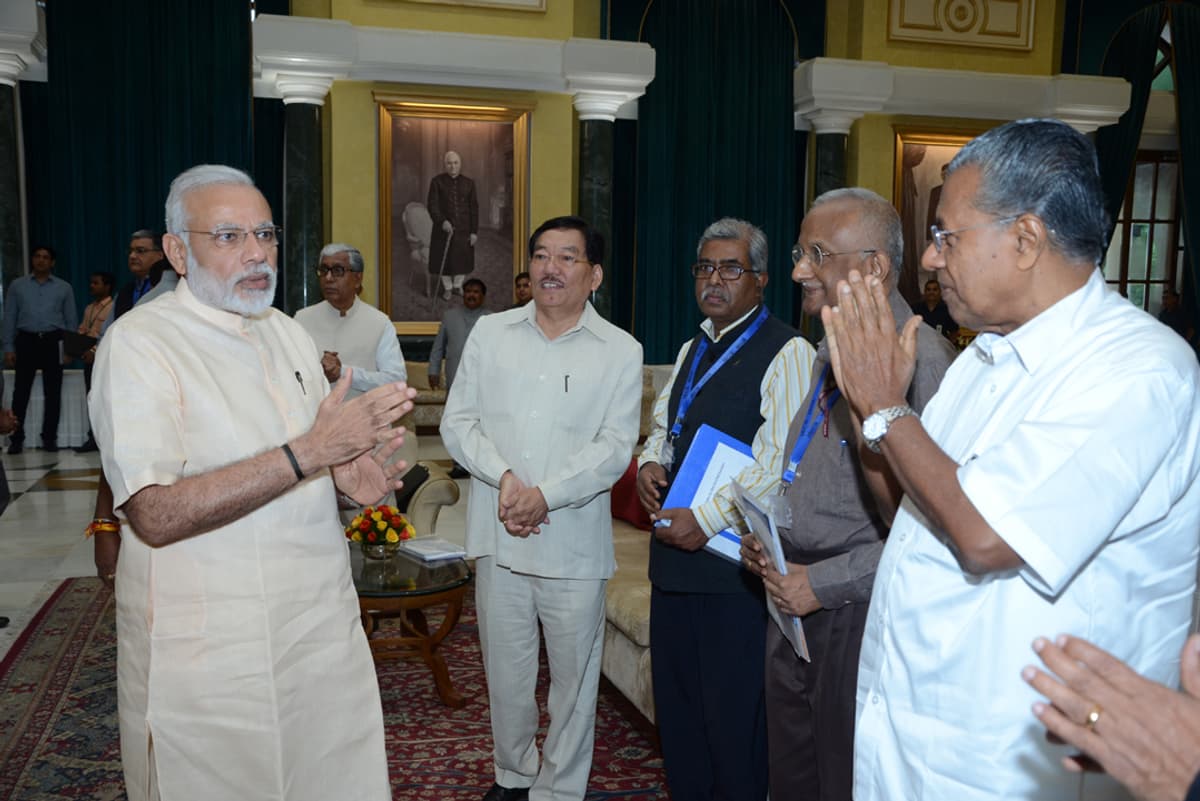
Shashi Tharoor, a Congress MP from Thiruvananthapuram, argued in The Indian Express on 28 October 2026 that the Centre should revive the Inter-State Council before it settles delimitation. The Council was set up under Article 263 by a Presidential Order of 28 May 1990 and has met eleven times. Its last meeting was on 16 July 2016. Tharoor says states need a forum to be heard on a change that alters their weight in Parliament, and that the Constitution already provides one.
Why does the Inter-State Council matter for Centre-State relations in India?
The Inter-State Council is the constitutional forum under Article 263 where the Prime Minister and all Chief Ministers can discuss subjects of common interest and recommend coordinated action. It has met only eleven times since 1990, the last on 16 July 2016, so Centre-State issues such as delimitation have no standing platform.
Prime Minister Modi popularised the phrase 'cooperative federalism', but it has remained a platitude without a platform.
Shashi Tharoor, The Indian Express (28 October 2026)
What happened?
Tharoor's column begins with delimitation. He writes that it has been rumoured for weeks that the government wished to reconvene Parliament, whose monsoon session has not been prorogued, to push through a delimitation bill. He says that now seems unlikely, either because the government is unsure of the votes or because it fears giving the Opposition another forum on the Election Commission.
These are Tharoor's claims and reports of rumours. Tharoor also says the bill is meant to lock in a two-thirds majority for states where the BJP is strong. The column offers no official confirmation of the bill, its text or its timing, and this article does not treat them as established.
His central point is institutional. Deciding delimitation in Parliament, he says, bypasses states, an essential element of the federal system. He asks which forum would let state governments express views on a matter of such importance, and answers that the Inter-State Council is the only obvious one, if the government revives it.
He describes the Council as dormant for over four decades after Independence and formally constituted in 1990 on the Sarkaria Commission's recommendation. He argues it became an appendage of the Home Ministry, that its meetings were repeatedly neglected, and that it never gained the prestige to influence legislation or policy affecting states.
His proposals are specific. Reconstitute the Council as an autonomous body. Make its secretariat an independent statutory authority staffed by civil servants and technical experts. Institutionalise a fixed meeting schedule with the Prime Minister, key Cabinet ministers and Chief Ministers. Use it to negotiate major reforms, review the local impact of national schemes and mediate inter-state disputes.
Note the author. Tharoor is an Opposition MP writing about a bill he criticises, and he has separately argued against an 850-seat Lok Sabha. That does not make his institutional point wrong. The official record, checked below, supports the core fact that the Council has met rarely. But readers should weigh the delimitation claims as political argument.
Key Concepts: what Article 263 says
Article 263 lets the President establish a Council by order if public interests would be served. Its duties may include three things. It can inquire into and advise on disputes between States. It can investigate and discuss subjects of common interest to some or all States, or to the Union and States. It can recommend action on such subjects, especially better coordination of policy.
The Sarkaria Commission, in its January 1988 report, recommended a permanent Inter-Governmental Council under Article 263, charged with the duties in clauses (b) and (c) other than socio-economic planning and development. The Government accepted this and notified the Council by Presidential Order dated 28 May 1990.
The Council has the Prime Minister as Chairman. Its members are the Chief Ministers of all States and of Union Territories with legislatures. Administrators of other Union Territories and six Union Cabinet ministers nominated by the Prime Minister also sit on it. It was last reconstituted by a Gazette notification of 8 November 2024.
Three Centre-State forums compared
| Forum | Legal basis | Who sits | Nature of work |
|---|---|---|---|
| Inter-State Council | Article 263; Presidential Order of 28 May 1990 | Prime Minister (Chair), all Chief Ministers, UT heads, six Union Cabinet ministers | Inquires, discusses and recommends; advisory |
| Zonal Councils (five) | Statutory, under the States Reorganisation Act, 1956 | Chaired by the Union Home Minister, with States of the zone | Advisory forums; meetings are still scheduled in late 2026 |
| GST Council | Article 279A (101st Amendment, 2016) | Union Finance Minister and State finance ministers | Recommends GST rates and rules; decisions need a weighted three-fourths majority |
The comparison explains why the GST Council works and the Inter-State Council does not. The GST Council has a defined job, a fixed membership and a voting rule. The Inter-State Council has a broad mandate and no schedule, so it meets only when the Prime Minister's office chooses to call it.
The meeting record
The ISC Secretariat site says the Council has met eleven times. The first meeting was on 10 October 1990. Meetings two to ten fall between October 1996 and December 2006. The eleventh was on 16 July 2016, with the Punchhi recommendations, Aadhaar and DBT, school education and internal security on the agenda.
Years between successive Inter-State Council meetings
| 1st to 2nd (1990-96) | 6 |
|---|---|
| 2nd to 3rd (1996-97) | 0.8 |
| 3rd to 4th (1997) | 0.4 |
| 4th to 5th (1997-99) | 1.1 |
| 5th to 6th (1999-2000) | 1.3 |
| 6th to 7th (2000-01) | 1.5 |
| 7th to 8th (2001-03) | 1.8 |
| 8th to 9th (2003-05) | 1.8 |
| 9th to 10th (2005-06) | 1.4 |
| 10th to 11th (2006-16) | 9.6 |
| 11th (Jul 2016) to 31 Oct 2026, no meeting | 10.3 |
Eleven meetings in over thirty-six years is about one every three years. Even the busiest stretch, 1996 to 2006, averaged a meeting every year or so, and much of that time went on working through Sarkaria chapters. Since 2006 there has been one meeting in twenty years.
How did we get here?
- 1950 Article 263 comes into force with the Constitution, allowing the President to set up an inter-State council.
- 1956 The States Reorganisation Act creates Zonal Councils as statutory regional forums.
- Jan 1988 The Sarkaria Commission recommends a permanent Inter-Governmental Council under Article 263.
- 28 May 1990 A Presidential Order establishes the Inter-State Council. Its first meeting is on 10 October 1990.
- 30 Mar 2010 The Punchhi Commission submits 273 recommendations and asks for an activated ISC meeting at least thrice a year.
- 16 Jul 2016 The eleventh and latest listed ISC meeting discusses the Punchhi recommendations, Aadhaar, school education and internal security.
- 8 Nov 2024 The Council is last reconstituted by Gazette notification.
- 28 Oct 2026 Tharoor's column calls for reviving the ISC as delimitation looms.
What two commissions asked for
The Punchhi Commission was constituted on 27 April 2007 under former Chief Justice Madan Mohan Punchhi. Its seven-volume report of 30 March 2010 made 273 recommendations. On the Council it said the body must be substantially strengthened and meet at least thrice a year on an agenda drawn up after consulting States.
It also asked for statutory provisions to follow up the Council's decisions, a professional secretariat with experts in law, management and political science, and a structure different from government departments. It floated moving the National Development Council's functions to the Council once it became a vibrant negotiating forum.
Compare this with Tharoor's list. His ideas of an autonomous secretariat, institutionalised meetings and expert staffing closely echo Punchhi. So the proposal is not new. What is new is the trigger, delimitation, which gives the old recommendation a political urgency it lacked in 2010.
Connect the dots
- Article 263 gives a constitutional forum for the Union and States to discuss common-interest subjects.
- Sarkaria (1988) asks for a permanent Council and a Presidential Order creates it in 1990.
- Meetings thin out, and the Council sits in the Home Ministry's secretariat with no fixed schedule.
- Punchhi (2010) asks for a stronger Council meeting thrice a year. The next meeting is in 2016.
- Delimitation raises a question about States' weight in Parliament and no standing platform exists to hear them.
- Tharoor asks the Centre to revive the Council by executive action, since it needs no new law.
Read more
Read More
- Inter-State Council Secretariat, Ministry of Home Affairs (Official record of the Council's genesis, composition and meetings)
- Article 371K and Ladakh: The Case for Asymmetric Federalism (Earlier DORI article on how the Constitution accommodates regions differently)
- Why the Election Commission's Crisis Won't Go Away (NEMO read on another constitutional body under strain)
The debate
| View | Core argument | Evidence |
|---|---|---|
| Revive and strengthen it | States need a standing platform before national decisions are made. A regular ISC would cut friction and build trust. | Sarkaria (1988) and Punchhi (2010) both asked for a stronger Council. Eleven meetings in over thirty-six years. |
| Forums already exist for specific areas | Zonal Councils and the GST Council give States a voice on regional and tax matters, so a general council adds little. | Zonal Council meetings are scheduled through late 2026. The GST Council has a voting rule and fixed membership. |
| It cannot deliver what the critics want | Article 263 allows discussion and recommendation only. It cannot stop Parliament from legislating on delimitation. | Article 263 text: discuss, investigate and recommend. Parliament's power over seat allocation sits in other Articles. |
| The problem is political will, not design | A council meets when governments want consultation. Without that, a stronger secretariat will not change outcomes. | The ISC met rarely under governments of different parties, and Tharoor says the Prime Minister can revive it without a law. |
Reasonable people differ on what a revived Council could achieve. It could build habits of consultation that make later disputes easier to settle. It could also become a talking shop if its recommendations carry no weight. Which result occurs depends less on the Council's design than on whether governments treat its advice as binding in practice.
What could happen next?
- [object Object]
- [object Object]
- [object Object]
Why does it matter for India?
| Dimension | Why it matters |
|---|---|
| Delimitation | Seat allocation among States affects their weight in the Lok Sabha. A change without a hearing for States can harden regional mistrust. |
| Fiscal federalism | Tax devolution and scheme design involve both levels. A regular forum would let States raise local impact before decisions. |
| Inter-State disputes | Article 263(a) lets the Council advise on disputes between States, including water and resource sharing. |
| Governors and emergency powers | Sarkaria chapters on the Governor and Article 356 were taken up by the ISC in the 1990s and early 2000s, showing the Council can handle contested topics. |
| Trust between parties | Opposition-ruled States see top-down policy as a grievance. A predictable forum offers a channel before the dispute reaches court. |
What should we watch?
- Whether the Government convenes a twelfth ISC meeting, and if so, whether delimitation is on the agenda.
- Whether any delimitation bill is introduced, and whether States are consulted beforehand.
- Whether the ISC Secretariat is restructured, or the Council's meeting schedule is announced.
- How Zonal Councils and the GST Council are used for the same Centre-State questions.
Bottom line
The Inter-State Council is a real constitutional institution that has been used rarely. Its official record backs the core of Tharoor's case: eleven meetings, the last in July 2016. Reviving it would give States a platform but not a veto, since Article 263 is advisory. The test is whether the Centre uses it on hard issues like delimitation, or only when convenient.
Exam Takeaway
- Article 263: the President may set up a council to advise on inter-State disputes, discuss common-interest subjects and recommend coordination of policy.
- The Inter-State Council was set up by Presidential Order on 28 May 1990 on the Sarkaria Commission's recommendation (January 1988 report). It is a constitutional provision, but the body itself is advisory.
- Composition: Prime Minister (Chair), all Chief Ministers, Chief Ministers of UTs with legislatures, Administrators of other UTs and six Union Cabinet ministers.
- Eleven meetings so far, the last on 16 July 2016. Zonal Councils (States Reorganisation Act, 1956) are statutory, and the GST Council rests on Article 279A.
- Punchhi Commission (2007 to 2010, 273 recommendations): ISC to meet at least thrice a year, with a professional secretariat.
Exam Angle
Prelims keeps testing which bodies are constitutional, statutory or extra-constitutional, and who recommended the Inter-State Council. Mains can ask why cooperative federalism has weak institutions. A strong answer separates the Council's design (advisory, Prime Minister-chaired) from its use (eleven meetings in thirty-six years), then weighs the Sarkaria and Punchhi proposals against the political will needed to follow them.
Syllabus Connections
- UPSC Prelims 2025 asked how many of the Inter-State Council, the National Security Council and Zonal Councils were established under constitutional provisions. The answer is only one: the Inter-State Council under Article 263.
- UPSC Prelims 2013 asked which of the National Development Council, the Planning Commission and Zonal Councils do not find mention in the Constitution. The answer is all three.
- UPPSC Prelims 2021 asked on whose recommendation the Inter-State Council was set up. The answer is the Sarkaria Commission.
- UPSC Mains 2015, GS-II asked about cooperative federalism and its drawbacks. UPSC Mains 2016 Essay set 'Cooperative federalism: Myth or reality'. UPPSC Mains 2020 asked about the Inter-State Council's role in promoting cooperative federalism.
- GS-II: federal structure, Centre-State relations, constitutional and statutory bodies, dispute redressal mechanisms.
Key terms
Possible Question
Practice Question
Question: With reference to the Inter-State Council in India, consider the following statements: 1. It was established by a Presidential Order under Article 263 of the Constitution. 2. The Prime Minister is its Chairman. 3. Its recommendations are binding on Parliament. Which of the statements given above is/are correct?
- 1 and 2 only
- 2 and 3 only
- 1 and 3 only
- 1, 2 and 3
Answer: 1 and 2 only
Statements 1 and 2 are correct. The Council was set up by Presidential Order dated 28 May 1990 under Article 263 and is chaired by the Prime Minister. Statement 3 is wrong: Article 263 allows the Council only to inquire, discuss and recommend, so its recommendations do not bind Parliament.
Practice Question (Mains-Style)
- Q. The Inter-State Council has been described as the missing link in India's federal equilibrium. Examine why it has been used so rarely and suggest reforms that could make it an effective forum for Centre-State consultation. (250 words, GS Paper II)
Sources & Further Reading
- The Indian Express: For federalism to be truly cooperative, revive the Inter-State Council, Shashi Tharoor (28 October 2026)
- Inter-State Council Secretariat, MHA: Inter-State Council Genesis
- Inter-State Council Secretariat, MHA: Inter-State Council Composition
- Inter-State Council Secretariat, MHA: Inter-State Council Meetings
- Inter-State Council Secretariat, MHA: Punchhi Commission