TB-Free India: Cases Down 21% as JOSH Squads Join Fight
The Health Ministry has launched JOSH youth squads to push TB screening, as WHO data shows India's TB incidence falling faster than the world's but still far from the 2030 goal.
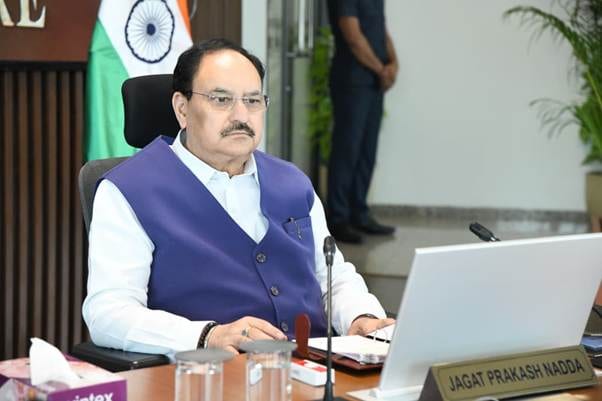
The Union Health Ministry launched JOSH (Joint Squad for Health) teams on 13 October 2026 to push TB screening and treatment. The pilot covers 55 districts in 11 States, using NCC cadets and MY Bharat volunteers. It builds on WHO data showing India's TB incidence fell 21% from 2015 to 2024. The global fall over the same period was 12%.
How much has TB fallen in India?
According to WHO's Global Tuberculosis Report 2025, new TB cases in India fell 21% between 2015 and 2024, against a 12% fall worldwide. Incidence dropped from 236.7 to 186.6 cases per lakh people. TB deaths fell 28% over the same period. India's treatment coverage is 92%, against a global 78%.
We are no longer waiting for patients to come to health facilities. We are proactively reaching communities, villages, urban wards and congregate settings to identify vulnerable individuals and detect cases early
J.P. Nadda, Union Health Minister, review of the TB Mukt Bharat Abhiyaan (19 June 2026)
What Happened?
Each JOSH team includes MY Bharat volunteers, NCC cadets and a designated Class-I officer. PIB lists 6,347 squads with 31,429 volunteers and 26,794 cadets. They will spread messages on early screening, finishing treatment and ending stigma. The campaign follows workshops the ministry held with MPs and MLAs on the TB Mukt Bharat Abhiyaan.
The intensified campaign began as a 100-day drive on 7 December 2024 in 347 high-priority districts. It has since gone nationwide. By June 2026, 28.1 crore people had been screened and 20 lakh given TB Preventive Treatment. 46,118 gram panchayats have been certified TB-free.
Why It Matters
India carries the world's largest TB burden, so its pace shapes the global result. A 21% fall beats the world average but misses WHO's 2025 End TB milestone of 50%. The 2030 goal is an 80% cut from 2015. Finding cases early, before people spread the disease, is the only route to that speed. Hence the shift to active screening and youth squads.
WHO estimates link India's 2024 TB cases to five main risk factors. Undernutrition tops the list at about 3.58 lakh cases, followed by diabetes at 3.22 lakh. This is why the programme pays nutrition support and recruits Ni-kshay Mitras to supply food baskets.
Concept Behind the News: How TB Spreads and Is Treated
TB is caused by the bacterium Mycobacterium tuberculosis and usually affects the lungs. It spreads through air droplets when a person with active lung TB coughs, sneezes or speaks. It does not spread through handshakes or shared utensils. Many infected people carry latent TB, which shows no symptoms but can turn active later.
Treatment lasts at least six months. Stopping early breeds drug-resistant strains, known as MDR-TB or RR-TB. India now uses the shorter BPaLM regimen for these patients, cutting treatment to six months. Over 15,000 patients have started it. The Nikshay Poshan Yojana pays ₹1,000 a month to every notified patient for nutrition.
Syllabus Connection
- GS-II (Social Justice): Issues relating to health, government health schemes and their outcomes
- GS-II (International): WHO, SDG 3 and global health goals
- GS-III (Science & Technology): Drug resistance, diagnostics and AI in health care
- Prelims (General Science): Bacterial diseases, modes of transmission and antibiotics
PYQ Connection
UPSC Prelims 1998
Question: Match List I with List II and select the correct answer using the codes given below the lists: List I (Disease) I. Malaria II. Poliomyelitis III. Tuberculosis IV. Ringworm List II (Organism) A. Fungi B. Bacteria C. Virus D. Protozoan Codes:
- I-D, II-C, III-B, IV-A
- I-D, II-C, III-A, IV-B
- I-C, II-D, III-A, IV-B
- I-C, II-D, III-B, IV-A
Answer: I-D, II-C, III-B, IV-A
Option (a) is correct. Malaria is caused by a protozoan (Plasmodium), polio by a virus, TB by a bacterium (Mycobacterium tuberculosis) and ringworm by a fungus. Knowing TB is bacterial explains why antibiotics treat it.
UPSC Prelims 1996
Question: According to the World Health Organisation, the disease which causes the death of the largest number of people today is
- AIDS
- Tuberculosis
- Malaria
- Ebola
Answer: Tuberculosis
Option (b) is correct for the 1990s, when WHO ranked TB as the leading infectious killer. TB is again the world's top infectious killer, and India carries the largest share of cases.
UPSC Prelims 1995
Question: Which one of the following antimicrobial drugs is suitable for treatment of both tuberculosis and leprosy?
- Isoniazid
- p-aminosalicylic acid
- Streptomycin
- Rifampicin
Answer: Rifampicin
Option (d) is correct. Rifampicin acts on both Mycobacterium tuberculosis and Mycobacterium leprae, so it is used for TB and leprosy. Resistance to rifampicin defines RR-TB, the group now treated with BPaLM.
CDS 2025
Question: Which one of the following is an example of airborne disease?
- Tuberculosis
- Malaria
- Dengue
- Cholera
Answer: Tuberculosis
Option (a) is correct. TB spreads through droplets released when a person with active lung TB coughs, sneezes or speaks. Malaria and dengue spread through mosquitoes, and cholera through contaminated water.
CAPF 2021
Question: Which one of the following diseases does not transmit through fine droplets coming out from mouth or nose of an infected person?
- Pneumonia
- COVID-19
- HIV-AIDS
- Tuberculosis
Answer: HIV-AIDS
Option (c) is correct. HIV spreads through blood, sexual contact and from mother to child, not through droplets. Pneumonia, COVID-19 and TB all spread through respiratory droplets, which is why TB screening targets crowded settings.
UPPSC Prelims 2021
Question: 'The Clock is Ticking' is the theme of which of the following days?
- International Yoga Day, 2021
- International Women's Day, 2021
- World Tuberculosis Day, 2021
- World Malaria Day, 2021
Answer: World Tuberculosis Day, 2021
Option (c) is correct. 'The Clock is Ticking' was the theme of World TB Day, 24 March 2021. It stressed that time is running out to meet global commitments to end TB.
UPSC Prelims 2019
Question: Which of the following are the reasons for the occurrence of multi-drug resistance in microbial pathogens in India? 1. Genetic predisposition of some people 2. Taking incorrect doses of antibiotics to cure diseases 3. Using antibiotics in livestock farming 4. Multiple chronic diseases in some people Select the correct answer using the code given below.
- 1 and 2
- 2 and 3 only
- 1, 3 and 4
- 2, 3 and 4
Answer: 2 and 3 only
Option (b) is correct. Incorrect antibiotic doses and antibiotic use in livestock drive multi-drug resistance. Genetic predisposition and chronic illness do not cause pathogens to become resistant. Incomplete TB treatment produces MDR-TB in the same way.
CDS 2020
Question: Antibiotic such as penicillin blocks
- cell wall formation in bacteria
- RNA synthesis in bacteria
- DNA synthesis in bacteria
- division in bacteria
Answer: cell wall formation in bacteria
Option (a) is correct. Penicillin blocks bacterial cell wall formation. TB drugs act on bacteria too; rifampicin, for example, blocks bacterial RNA synthesis. Antibiotics do not work against viruses.
UPSC Prelims 2004
Question: Consider the following statements: 1. Femur is the longest bone in the human body. 2. Cholera is a disease caused by bacteria. 3. ‘Athlete’s foot’ is a disease caused by virus. Which of the statements given above are correct?
- 1 and 2
- 2 and 3
- 1 and 3
- 1, 2 and 3
Answer: 1 and 2
Option (a) is correct. The femur is the longest bone, and cholera is bacterial (Vibrio cholerae). Athlete's foot is fungal, not viral, so statement 3 is wrong. TB, like cholera, is a bacterial disease.
UPSC Prelims 1996
Question: Which of the following would lead to ‘malnutrition’? I. Overnutrition II. Undernutrition III. Imbalanced nutrition Select the correct answer using the codes given below:
- II alone
- II and III
- I and III
- I, II and III
Answer: I, II and III
Option (d) is correct. Malnutrition covers overnutrition, undernutrition and imbalanced nutrition. Undernutrition is linked to about 3.58 lakh of India's 2024 TB cases, the largest single risk factor.
UPSC Prelims 2017
Question: Which of the following are the objectives of ‘National Nutrition Mission’? 1. To create awareness relating to malnutrition among pregnant women and lactating mothers. 2. To reduce the incidence of anaemia among young children, adolescent girls and women. 3. To promote the consumption of millets, coarse cereals and unpolished rice. 4. To promote the consumption of poultry eggs. Select the correct answer using the code given below:
- 1 and 2 only
- 1, 2 and 3 only
- 1, 2 and 4 only
- 3 and 4 only
Answer: 1 and 2 only
Option (a) is correct. POSHAN Abhiyaan (National Nutrition Mission) aims to raise awareness of malnutrition and cut anaemia among children, adolescent girls and women. Better nutrition also lowers TB risk.
UPSC Prelims 2012
Question: With reference to National Rural Health Mission, which of the following are the jobs of ‘ASHA’, a trained community health worker? 1. Accompanying women to the health facility for antenatal care check-up 2. Using pregnancy test kits for early detection of pregnancy 3. Providing information on nutrition and immunization 4. Conducting the delivery of baby
- 1, 2 and 3 only
- 2 and 4 only
- 1 and 3 only
- 1, 2 and 4
Answer: 1, 2 and 3 only
Option (a) is correct. ASHAs accompany women for check-ups, use pregnancy test kits and share information on nutrition and immunisation. They do not conduct deliveries. Community workers like ASHAs also help trace TB contacts.
UPSC Prelims 2023
Question: Consider the following statements: Statement-I: India's public sector health care system largely focuses on curative care with limited preventive, promotive and rehabilitative care. Statement-II: Under India's decentralized approach to health care delivery, the States are primarily responsible for organizing health services. Which one of the following is correct in respect of the above statements?
- Both Statement-I and Statement-II are correct and Statement-II is the correct explanation for Statement-I
- Both Statement-I and Statement-II are correct and Statement-II is not the correct explanation for Statement-I
- Statement-I is correct but Statement-II is incorrect
- Statement-I is incorrect but Statement-II is correct
Answer: Both Statement-I and Statement-II are correct and Statement-II is not the correct explanation for Statement-I
Option (b) is correct, as per the official key. Public health care leans towards cure over prevention, and States run health services, but the second fact does not explain the first. TB campaigns try to shift effort to early detection and prevention.
UPSC Prelims 2004
Question: With reference to the Constitution of India, which one of the following pairs is not correctly matched?
- Forests: Concurrent List
- Stock Exchanges: Concurrent List
- Post Office Savings Bank: Union List
- Public Health: State List
Answer: Stock Exchanges: Concurrent List
Option (b) is the incorrectly matched pair: stock exchanges are in the Union List. Public health is in the State List, which is why TB campaigns rely on States to screen and treat patients.
UPSC Prelims 2022
Question: With reference to Ayushman Bharat Digital Mission, consider the following statements: 1. Private and public hospitals must adopt it. 2. As it aims to achieve universal health coverage, every citizen of India should be part of it ultimately. 3. It has seamless portability across the country. Which of the statements given above is/are correct?
- 1 and 2 only
- 3 only
- 1 and 3 only
- 1, 2 and 3
Answer: 3 only
Option (b) is correct. The Ayushman Bharat Digital Mission is voluntary for hospitals and citizens, and offers portable health records across India. The Ni-kshay platform similarly tracks TB patients and pays them digitally.
UPSC Prelims 2020
Question: Consider the following pairs: International agreement/set-up - - - Subject 1. Alma-Ata Declaration - - - Healthcare of the people 2. Hague Convention - - - Biological and chemical weapons 3. Talanoa Dialogue - - - Global climate change 4. Under2 Coalition - - - Child rights Which of the pairs given above is/are correctly matched?
- 1 and 2 only
- 4 only
- 1 and 3 only
- 2, 3 and 4 only
Answer: 1 and 3 only
Option (c) is correct. The Alma-Ata Declaration (1978) set the goal of primary health care for all, and the Talanoa Dialogue concerns climate change. The Hague Convention does not cover biological and chemical weapons, and Under2 Coalition is a climate group. TB control rests on primary health care.
UPPSC Prelims 2025
Question: Match List-I with List-II and select the correct answer from the code given below the lists. List-I (Sustainable Development Goals) A. Goal 1 B. Goal 3 C. Goal 4 D. Goal 6 List-II (Area of Goal) 1. Clean water and sanitation 2. Quality education 3. To end poverty in all forms 4. Good health and well-being Code:
- A-4, B-3, C-1, D-2
- A-3, B-4, C-1, D-2
- A-3, B-4, C-2, D-1
- A-4, B-3, C-2, D-1
Answer: A-3, B-4, C-2, D-1
Option (c) is correct. Goal 1 is ending poverty, Goal 3 good health and well-being, Goal 4 quality education and Goal 6 clean water and sanitation. Ending the TB epidemic by 2030 is target 3.3 under Goal 3.
UPPSC Prelims 2023
Question: Which of the following is not a sustainable development goal targeted to be achieved by 2030?
- Zero Hunger
- Gender Equality
- Good health and well being
- Space Research
Answer: Space Research
Option (d) is correct. Space research is not one of the 17 SDGs, while zero hunger, gender equality and good health are. SDG 3 is where the 2030 goal to end TB sits.
Visual Explanation: TB Incidence Against the 2030 Goal
Estimated TB incidence in India (cases per lakh people)
| 2015 | 236.7 |
|---|---|
| 2018 | 208.3 |
| 2020 | 197.2 |
| 2022 | 195.8 |
| 2024 | 186.6 |
India's 2024 TB cases linked to risk factors
| Undernutrition | 358000 |
|---|---|
| Diabetes | 322000 |
| Alcohol use | 245000 |
| Smoking | 93000 |
| HIV | 33000 |
Connect the Dots
- 1962: National TB Control Programme launched.
- 1993: Revised National TB Control Programme (RNTCP) begins.
- March 2018: Delhi End TB Summit; India sets its TB-free India goal.
- April 2018: Nikshay Poshan Yojana starts nutrition payments to patients.
- 2020: RNTCP renamed National TB Elimination Programme (NTEP).
- 9 September 2022: PM TB Mukt Bharat Abhiyaan and Ni-kshay Mitras launched.
- 7 December 2024: 100-day intensified campaign in 347 districts, later nationwide.
- 13 October 2026: JOSH youth squads launched in 55 districts.
Read More
Read More
- Central TB Division, Ministry of Health and Family Welfare (Official NTEP site: strategy, guidelines and India TB Reports)
- Shigellosis AMR: Kerala Outbreak (Previous DORI article on antimicrobial resistance in India)
Exam Takeaway
- TB is a bacterial, airborne disease caused by Mycobacterium tuberculosis.
- WHO: India's TB incidence fell 21% (2015-2024) against 12% globally; deaths fell 28%.
- JOSH squads launched on 13 October 2026 in 55 districts of 11 States.
- BPaLM cuts drug-resistant TB treatment to six months; Nikshay Poshan pays ₹1,000 a month.
- RNTCP became NTEP in 2020; PM TB Mukt Bharat Abhiyaan began on 9 September 2022.
Exam Angle
Prelims can test the TB pathogen, its spread, drug resistance, BPaLM and the NTEP timeline. Mains can ask: "Why has India's TB decline been slower than the End TB targets, and what should change?" Use active case-finding, undernutrition, private-sector notification and treatment adherence.
Possible Question
Practice Question
Question: With reference to tuberculosis control in India, consider the following statements: 1. The Revised National TB Control Programme was renamed the National TB Elimination Programme in 2020. 2. The BPaLM regimen is used to treat drug-resistant TB. 3. Under the Nikshay Poshan Yojana, notified TB patients receive ₹1,000 a month for nutrition. Which of the statements given above is/are correct?
- 1 only
- 1 and 2 only
- 2 and 3 only
- 1, 2 and 3
Answer: 1, 2 and 3
All three are correct. RNTCP was renamed NTEP in 2020 to reflect the elimination goal. BPaLM is a six-month regimen for MDR/RR-TB patients. The Nikshay Poshan Yojana pays ₹1,000 a month by direct benefit transfer to each notified patient.