
CBD COP17 Yerevan: Nature Goals Back on Track?
COP17 of the Convention on Biological Diversity ended in Yerevan on 30 October 2026 with two major texts approved, weak language on harmful subsidies and the Cali Fund design deferred.
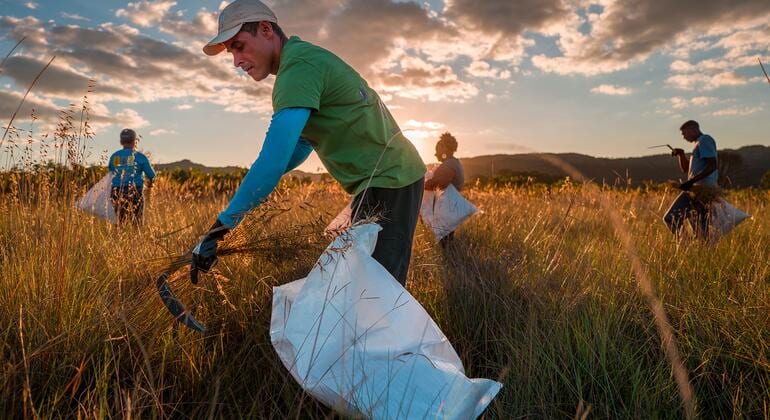
Nearly 200 nations approved two major texts at the UN biodiversity summit, COP17, in Yerevan, Armenia, on 30 October 2026 after overtime talks. The Convention on Biological Diversity (CBD) meeting tried to revive the pledge to halt and reverse nature loss by 2030. Delegates agreed weak language on harmful subsidies and left the design of the Cali Fund unresolved. Ecuador will host the next summit in 2028.
What did COP17 in Yerevan decide on nature goals in October 2026?
Nearly 200 countries approved two major texts on 30 October 2026, meant to revive the 2030 nature goals, which include protecting 30% of land and oceans. Language on harmful subsidies is weak, the Cali Fund design was pushed back by two years, and Ecuador will host the next biodiversity summit in 2028.
Nature will not wait for the pace of our negotiations.
Monique Barbut, French Ecological Transition Minister, statement on the COP17 outcome (31 October 2026)
What Happened?
The 17th Conference of the Parties (COP17) to the CBD closed in Yerevan on Saturday morning, 31 October 2026. The final plenary ran through Friday night. COP17 president Hambardzum Matevosyan brought down the gavel on two major texts. Their final versions were not yet available on Saturday.
The summit sought to revive the commitment to halt and reverse the destruction of nature by 2030, after global efforts fell short. The UN had warned that progress was insufficient on the 2030 goals. These include protecting 30% of Earth's land and oceans, tackling pollution and invasive species, and raising conservation money.
Harmful subsidies were among the most fraught items. These are incentives for activities that damage nature, such as fossil fuels, intensive agriculture and overfishing. The agreed text expresses the issue in weak terms. WWF and Greenpeace both said it still showed political momentum.
A rare fight over science also marked the summit. A number of countries were accused of undermining efforts to approve key reports. Swiss negotiator Gabriela Blatter said, on behalf of dozens of countries, that science is not negotiable.
Finance split delegates. The European Union led a push for wealthy emerging economies such as China to contribute to conservation. A draft invited countries outside the developed-country donor group to join voluntarily. Questions over the design of the Cali Fund were left unresolved. A campaign group said the fund will stay empty until decisions are taken two years from now.
Why It Matters
The 2030 goals depend on money and rules, not only pledges. Developing nations want more finance and technology transfer. Wealthy countries want broader contributors. Pushing Cali Fund design to 2028 delays benefit-sharing money, and weak subsidy wording leaves the largest drivers of loss largely untouched. French minister Monique Barbut called the outcome not commensurate with the crisis.
India's position at COP17 is not reported in the source. The final text of the two agreements was also unavailable at the time of writing, so exact targets and funding figures cannot be confirmed.
Concept Behind the News: CBD and the 2030 Framework
The Convention on Biological Diversity is a UN treaty with three aims: conserve biodiversity, use it sustainably, and share the benefits of genetic resources fairly. The Conference of the Parties is its decision-making body. The Cartagena Protocol covers biosafety and the Nagoya Protocol covers access and benefit sharing.
COP16 met in Cali, Colombia, to implement the 2022 Kunming-Montreal Global Biodiversity Framework. It created a permanent body for Indigenous peoples. The Cali Fund came out of that process as a UN mechanism to attract corporate payments for the use of nature's sequenced genetic data. It is reported to be close to empty.
Syllabus Connection
- GS-III (Environment): biodiversity conservation, international conventions and climate-nature finance
- GS-II (IR): international institutions, North-South finance and technology debates
- Prelims (Environment): CBD, protocols, GEF, 30x30 and the Biological Diversity Act, 2002
- CDS (General Knowledge): environment, general science and current events
- CAPF AC (Paper II, General Studies): environment, biodiversity and current events
PYQ Connection
UPSC Prelims 2023
Question: Consider the following statements : 1. In India, the Biodiversity Management Committees are key to the realization of the objectives of the Nagoya Protocol. 2. The Biodiversity Management Committees have important functions in determining access and benefit sharing, including the power to levy collection fees on the access of biological resources within its jurisdiction. Which of the statements given above is/are correct?
- 1 only
- 2 only
- Both 1 and 2
- Neither 1 nor 2
Answer: Both 1 and 2
Option (c) is correct. Biodiversity Management Committees are local bodies under the Biological Diversity Act, 2002. They help India deliver the Nagoya Protocol's access and benefit-sharing goal and can levy collection fees for access to biological resources in their area. Cali Fund talks at COP17 sit on the same benefit-sharing theme.
UPSC Prelims 2014
Question: With reference to 'Global Environment Facility', which of the following statements is/are correct?
- It serves as financial mechanism for 'Convention on Biological Diversity' and 'United Nations Framework Convention on Climate Change'
- It undertakes scientific research on environmental issues at global level
- It is an agency under OECD to facilitate the transfer of technology and funds to underdeveloped countries with specific aim to protect their environment
- Both (a) and (b)
Answer: It serves as financial mechanism for 'Convention on Biological Diversity' and 'United Nations Framework Convention on Climate Change'
Option (a) is correct. The Global Environment Facility is a financial mechanism for the CBD and the UNFCCC, among other conventions. It funds projects and does not itself carry out scientific research, and it is not an OECD agency. COP17's finance fight is about adding funding sources beyond such channels.
CDS 2022
Question: A global initiative popularly known as ‘30 × 30 target’ is often seen in the news. Which one of the following statements best reflects this initiative?
- At least 30% of the planet should be protected by 2030.
- At least 30% of the cultivated area should be brought under organic farming by 2030.
- At least 30% of the energy requirements should be met by renewable sources by 2030.
- At least 30% of the people below poverty line should be brought out of their poverty by 2030.
Answer: At least 30% of the planet should be protected by 2030.
Option (a) is correct. The 30x30 target aims to protect at least 30% of the planet's land and oceans by 2030. It is part of the Kunming-Montreal Global Biodiversity Framework, whose delivery COP17 was meant to speed up.
CAPF 2020
Question: The Cartagena Protocol, to which India is a party, is related to
- combat the greenhouse gasses and to reduce the global warming and climate change
- biosafety, negotiated under the aegis of the Convention on Biological Diversity
- combat the ozone depleting substances to protect the human lives from diseases
- combat the phenomenon of desertification by improving dry land farming in dry regions
Answer: biosafety, negotiated under the aegis of the Convention on Biological Diversity
Option (b) is correct. The Cartagena Protocol deals with the safe handling and transboundary movement of living modified organisms, which is biosafety. It was negotiated under the Convention on Biological Diversity, the same treaty that held COP17.
Visual Explanation: From Rio to Yerevan
- 1992 The Convention on Biological Diversity opens for signature at the Rio Earth Summit.
- 2010 The Nagoya Protocol on access and benefit sharing is adopted at COP10.
- 2022 The Kunming-Montreal Global Biodiversity Framework sets targets for 2030, including 30% protection.
- 2024 COP16 in Cali works to implement the framework and creates a permanent body for Indigenous peoples.
- 30 Oct 2026 COP17 in Yerevan approves two major texts after overtime talks; Cali Fund design is left unresolved.
- 2028 Ecuador hosts the next biodiversity talks, chosen over Panama in a secret vote.
Where COP17 left the contested issues
| Issue | Outcome |
|---|---|
| Harmful subsidies (fossil fuels, intensive agriculture, overfishing) | Agreed text is weak; NGOs call it a step forward with weaknesses |
| Conservation finance | EU pushed wealthy emerging economies such as China to contribute; draft invited voluntary joining |
| Cali Fund design | Unresolved; decisions pushed two years ahead |
| Role of science | Dozens of countries, speaking through Switzerland, objected to constraints on scientific evidence |
| Next summit | Ecuador to host in 2028, defeating Panama |
Connect the Dots
- The CBD's three aims set the base: conserve, use sustainably and share benefits fairly.
- The 2022 Kunming-Montreal framework fixes 2030 targets, including 30x30.
- COP16 in Cali tries to implement it and creates the Cali Fund for genetic-data benefits.
- COP17 in Yerevan approves two major texts but leaves subsidies weak and fund design open.
- Finance and technology demands from developing nations meet EU calls for wider donors.
- Ecuador's 2028 summit becomes the next test of delivery.
Read More
Read More
- Convention on Biological Diversity: Conference of the Parties (Official CBD page for COP decisions and meetings)
- India Environment Report 2026 (NEMO read on India's domestic environmental picture)
Exam Takeaway
- COP17 of the CBD: Yerevan, Armenia; two major texts approved on 30 October 2026 after overtime.
- Goal: halt and reverse nature loss by 2030, with 30x30 protection of land and oceans.
- Fights: harmful subsidies (weak text), conservation finance (EU versus emerging economies) and a science row.
- Cali Fund design deferred by two years; Ecuador hosts the 2028 summit.
- Static link: CBD 1992, Cartagena (biosafety), Nagoya (access and benefit sharing), GEF, Biological Diversity Act 2002.
Exam Angle
Prelims can test the CBD, its protocols, 30x30 and the GEF. Mains can ask whether global biodiversity targets fail on finance rather than ambition. Argue that weak subsidy language and a near-empty fund show the gap, and tie in India's Biodiversity Management Committees.
Possible Question
Practice Question
Question: With reference to the Convention on Biological Diversity (CBD), consider the following statements: 1. The Cartagena Protocol on biosafety was negotiated under the CBD. 2. The 30x30 target aims to protect at least 30% of the planet by 2030. 3. COP17 in October 2026 was hosted by Colombia. Which of the statements given above is/are correct?
- 1 and 2 only
- 2 and 3 only
- 1 and 3 only
- 1, 2 and 3
Answer: 1 and 2 only
Statements 1 and 2 are correct. Statement 3 is wrong: COP17 was held in Yerevan, Armenia. Colombia hosted COP16 in Cali in 2024.