India-Mauritius Tax Treaty Gets a Principal Purpose Test
The Centre has brought a Principal Purpose Test into the India-Mauritius Double Taxation Avoidance Agreement, closing a long-standing treaty-shopping route for foreign investment.
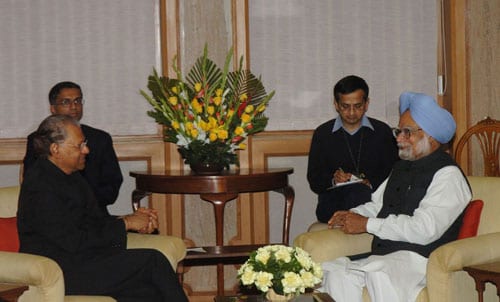
The Centre on 14 October 2026 announced that the amended India-Mauritius tax treaty is in force, adding a Principal Purpose Test (PPT). Tax authorities can now deny treaty benefits if obtaining them was one of the principal purposes of an arrangement. The Protocol, signed on 7 March 2024, targets investors who route money through Mauritius mainly to save tax.
What is the Principal Purpose Test in the India-Mauritius tax treaty?
The Principal Purpose Test lets Indian tax officers deny India-Mauritius treaty benefits if obtaining those benefits was one of the principal purposes of a transaction or arrangement. It comes from a Protocol signed on 7 March 2024 and brought into operation in October 2026. It targets treaty shopping, where investors route money through Mauritius mainly to cut tax.
without creating opportunities for non-taxation or reduced taxation through tax evasion or avoidance
Preamble, Protocol amending the India-Mauritius Double Taxation Avoidance Agreement (signed 7 March 2024)
What Happened?
The Centre announced that the 2024 Protocol to the India-Mauritius Double Taxation Avoidance Agreement (DTAA) is operational after both countries completed their legal formalities. The Mauritius Cabinet had cleared ratification on 17 July 2026. The Protocol revises the treaty preamble and adds Article 27B, which makes treaty benefits conditional on the PPT. All India Radio reports the amendment as effective from 10 October 2026.
Reports differ on the effective date: the Economic Times summary points to August 2026, while All India Radio gives 10 October 2026. The reports reviewed also do not say whether the test reaches investments made before the Protocol took effect. Readers should check the notified text before relying on either point.
Why It Matters
Mauritius has long been a favoured route for foreign funds entering India. The earlier fixes were rule-based: a 2016 limitation-of-benefits clause and the General Anti-Avoidance Rule (GAAR). The PPT is a purpose-based test, so officials can look at the commercial reason for a structure rather than only its form. That widens their discretion and raises compliance risk for funds with thin local substance. Investors with genuine operations in Mauritius should be largely unaffected, but disputes over what counts as a "principal purpose" are likely to reach tribunals and courts.
Concept Behind the News: Treaty Shopping and the PPT
A Double Taxation Avoidance Agreement allocates taxing rights between two countries so income is not taxed twice. India and Mauritius signed theirs in 1982. It taxed capital gains on shares only in the country of residence, and Mauritius levied no such tax, so gains escaped tax altogether. Circular 789 of 2000 accepted a Mauritian tax residency certificate as proof of residence, and the Supreme Court upheld it in Union of India v. Azadi Bachao Andolan (2003). A 2016 Protocol gave India the right to tax share gains for shares acquired from 1 April 2017, with a transitional concession until 31 March 2019. The 2024 Protocol adds the minimum anti-abuse standard under the OECD BEPS project, Action 6: a treaty preamble against tax avoidance and the PPT.
Syllabus Connection
- GS-III (Economy): Taxation, tax avoidance and international tax cooperation
- GS-III (Economy): FDI inflows, routing and the external sector
- GS-II (IR): Bilateral agreements and India-Mauritius relations
- GS-II (Governance): Role of the judiciary in tax and investment policy
PYQ Connection
UPSC Prelims 2010
Question: A great deal of Foreign Direct Investment (FDI) to India comes from Mauritius than from many major and mature economies like UK and France. Why?
- India has preference for certain countries as regards receiving FDI
- India has double taxation avoidance agreement with Mauritius
- Most citizens of Mauritius have ethnic identity with India and so they feel secure to invest in India
- Impending dangers of global climatic change prompt Mauritius to make huge investments in India
Answer: India has double taxation avoidance agreement with Mauritius
Option (b) is correct. The India-Mauritius DTAA let investors route funds through Mauritius with no tax on share gains, so recorded FDI from Mauritius was far higher than from larger economies. This is the very route the new Principal Purpose Test targets. The other options have no basis in policy or investment data.
UPSC Prelims 2018
Question: With reference to India's decision to levy an equalization tax of 6% on online advertisement services offered by non-resident entities, which of the following statements is/are correct? 1. It is introduced as a part of the Income Tax Act. 2. Non-resident entities that offer advertisement services in India can claim a tax credit in their home country under the 'Double Taxation Avoidance Agreements'. Select the correct answer using the code given below:
- 1 only
- 2 only
- Both 1 and 2
- Neither 1 nor 2
Answer: Neither 1 nor 2
Option (d) is correct. The equalisation levy sits outside the Income Tax Act, in the Finance Act, 2016, so it is not an income tax and treaty relief does not apply to it. It shows why the scope of a DTAA matters in international tax questions.
UPSC Prelims 2007
Question: Participatory Notes (PNs) are associated with which one of the following?
- Consolidated Fund of India
- Foreign Institutional Investors
- United Nations Development Programme
- Kyoto Protocol
Answer: Foreign Institutional Investors
Option (b) is correct. Participatory Notes are instruments issued by registered foreign institutional investors to overseas clients who want exposure to Indian markets without registering directly. They are a classic example of indirect routing of foreign money, the same concern behind the Principal Purpose Test.
CAPF 2024
Question: Which of the following two organizations are parts of TIWB (Tax Inspectors Without Borders)?
- United Nations Development Programme (UNDP) and Association of Southeast Asian Nations (ASEAN)
- Organization for Economic Cooperation and Development (OECD) and ASEAN
- UNDP and Organization for Economic Cooperation and Development (OECD)
- International Labour Organization (ILO) and ASEAN
Answer: UNDP and Organization for Economic Cooperation and Development (OECD)
Option (c) is correct. Tax Inspectors Without Borders is a joint initiative of the OECD and UNDP that helps developing countries build audit capacity against tax avoidance. The OECD also runs the BEPS project behind the Principal Purpose Test.
Visual Explanation: How the Rules Tightened
India-Mauritius treaty: three stages of tightening
| Stage | Rule on share gains and abuse |
|---|---|
| Original treaty (1982/83) | Gains taxed only in the country of residence; Mauritius levied none, so gains went untaxed |
| 2000 and 2003 | Circular 789 accepts residency certificate; Supreme Court upholds it in Azadi Bachao Andolan |
| 2016 Protocol | India taxes gains on shares acquired from 1 April 2017; limitation-of-benefits clause added |
| GAAR (from 1 April 2017) | Domestic anti-avoidance rule can disregard impermissible avoidance arrangements |
| 2024 Protocol (operational Oct 2026) | Treaty preamble against avoidance plus a Principal Purpose Test (Article 27B) |
Connect the Dots
- 1982: India and Mauritius sign the DTAA; share gains are taxable only in the residence country.
- 2000 and 2003: Circular 789 and Azadi Bachao Andolan make a Mauritian residency certificate decisive.
- 2012: GAAR is introduced through the Finance Act, 2012, and comes into effect from 1 April 2017.
- 2016: A Protocol gives India source-based taxation of share gains and adds a limitation-of-benefits clause.
- 7 March 2024: The new Protocol adds the Principal Purpose Test and a revised preamble.
- 17 July 2026: Mauritius's Cabinet approves ratification.
- 14 October 2026: The Centre announces the PPT is in force.
- Next: Guidance on how officers apply the test, and how funds restructure Mauritius entities with real substance.
Read More
- Income Tax Department: DTAA and international taxation (Official list of India's tax treaties and protocols)
- FDI Clarifications: Land Border Nations Policy (Previous DORI article on how India screens the source of foreign investment)
Exam Takeaway
- Principal Purpose Test: treaty benefits are denied if obtaining them was one of the principal purposes of an arrangement.
- The Protocol was signed on 7 March 2024; Mauritius's Cabinet cleared it on 17 July 2026; India announced it in force on 14 October 2026.
- The 2016 Protocol made share gains taxable in India for shares acquired from 1 April 2017.
- GAAR applies from 1 April 2017; the PPT is a treaty-level, purpose-based test.
- The PPT follows OECD BEPS Action 6, the minimum standard against treaty abuse.
Exam Angle
Prelims can test the meaning of DTAA, treaty shopping and GAAR, plus the year of key protocols. Mains can ask: "Does closing the Mauritius route hurt foreign investment, and how should India balance revenue protection with investor certainty?" Use the 1982 to 2024 timeline, the shift from rule-based to purpose-based tests, and the substance requirement as evidence.
Possible Question
Practice Question
Question: With reference to the India-Mauritius tax treaty, consider the following statements: 1. The Principal Purpose Test allows treaty benefits to be denied if obtaining them was one of the principal purposes of an arrangement. 2. The 2016 Protocol made gains on shares acquired from 1 April 2017 taxable in India. 3. The treaty allows Mauritius to tax all Indian-source capital gains of its residents. Which of the statements given above is/are correct?
- 1 only
- 1 and 2 only
- 2 and 3 only
- 1, 2 and 3
Answer: 1 and 2 only
Statements 1 and 2 are correct. The PPT is the anti-abuse test added by the 2024 Protocol, and the 2016 Protocol moved taxation of share gains to India for shares acquired from 1 April 2017. Statement 3 is wrong: the shift was towards source-based taxation in India, not residence-based taxation in Mauritius.