RBI Launches Three Surveys for Monetary Policy
RBI launches three surveys to capture inflation expectations and consumer confidence for monetary policy inputs. Understand monetary transmission, inflation targeting, and expectations management.
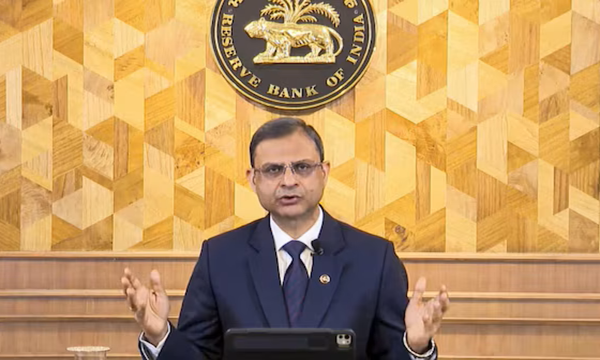
The Reserve Bank of India launched three surveys on 9 September 2026 to gather inputs for its bi-monthly monetary policy decision on 7 October 2026. The Inflation Expectations Survey (IESH), Urban Consumer Confidence Survey (UCCS), and Rural Consumer Confidence Survey (RCCS) capture inflation perceptions and spending intentions across 19 cities and 31 states. These surveys inform the Monetary Policy Committee's interest rate decisions under RBI's 4 per cent inflation target.
Why has the RBI launched three new inflation surveys in September 2026?
On 9 September 2026, the RBI launched its Inflation Expectations Survey of Households and its urban and rural consumer confidence surveys to feed the Monetary Policy Committee's 7 October decision. Household expectations matter because they are self-fulfilling: if people expect higher prices they demand higher wages and spend sooner, pushing actual inflation above the 4% target.
Price stability is a necessary precondition for sustained growth. Anchoring inflation expectations is as important as managing the interest rate, because expectations shape the very inflation we are trying to control.
Raghuram Rajan, Governor, Reserve Bank of India, Inaugural Address, Mumbai (4 September 2013)
What Happened?
On 9 September 2026, the RBI launched three coordinated surveys to inform its monetary policy decisions. The Inflation Expectations Survey of Households (IESH) targets 5,000 households across 19 cities and seeks subjective assessments of inflation based on individual consumption baskets over 3-month, 1-year, and 3-year horizons. The Urban Consumer Confidence Survey (UCCS) covers urban households across 13 cities seeking qualitative responses on economic situation, employment prospects, price levels, household income, and spending plans. The Rural Consumer Confidence Survey (RCCS) covers rural and semi-urban areas across 31 states and union territories with similar themes.
The data collected through these surveys feed directly into the Monetary Policy Committee (MPC) framework established under the Reserve Bank of India Act 2016. The MPC comprises six members: three RBI officials (Governor, Deputy Governor overseeing monetary policy, and one other Deputy Governor) and three external members nominated by the government. The bi-monthly monetary policy decisions target an inflation rate of 4 per cent with a tolerance band of plus or minus 2 per cent. The current monetary policy is in tightening mode, with the repo rate at 6.25 per cent (as of September 2026), aimed at controlling demand-side inflation.
These surveys exemplify how modern central banks use data-driven approaches to monetary policy. Inflation expectations are critical because they are self-fulfilling: if households and businesses expect high inflation, they adjust wages, prices, and spending behaviour accordingly, creating actual inflation. By measuring expectations, the RBI can gauge second-round inflation effects and calibrate policy pre-emptively. The geographic differentiation (urban vs rural) also reflects India's economic heterogeneity: rural inflation expectations often diverge from urban due to different consumption baskets (food-heavy in rural areas, services-heavy in urban). For UPSC, this illustrates how information asymmetry is a central challenge in policy-making, and why central banks conduct surveys and research.
Why It Matters
This survey launch matters across three dimensions simultaneously. First, monetary transmission: RBI's repo rate changes only affect inflation if households believe the central bank will control inflation (anchored expectations). If unanchored, households hoard goods and demand wage increases, offsetting rate hikes. Surveys measure this belief, enabling RBI to gauge whether tightening will be effective. Second, financial stability: unanchored expectations destabilise currency (rupee depreciation), asset prices (equity volatility), and credit (firms demand higher rates). A survey that reveals unanchored expectations allows RBI to act pre-emptively. Third, fiscal-monetary coordination: if inflation expectations are unanchored despite government fiscal policy, the central bank must hike rates aggressively, potentially slowing growth. For UPSC, this exemplifies the complexity of macroeconomic management: central banks manage beliefs as much as money supply.
Concept Behind the News: Monetary Policy Transmission
- Definition: The process through which central bank policy decisions (interest rate changes) flow through the financial system to real economic outcomes (inflation, growth, employment).
- Interest rate channel: RBI raises repo rate (borrowing cost for banks); this increases lending rates, reducing credit demand and aggregate spending, which lowers inflation.
- Expectations channel: If households expect inflation to remain under control (anchored expectations), they don't hoard goods or demand wage increases, making inflation lower in reality.
- Asset price channel: Lower interest rates increase valuations of stocks and real estate, raising household wealth and spending; higher rates reduce asset prices and wealth.
- Exchange rate channel: Higher interest rates attract foreign investment, appreciating the rupee, which makes imports cheaper and exports costly, affecting inflation.
- Why surveys matter: Unanchored expectations break the transmission chain; if households don't believe central bank's inflation target, policy rate changes have weaker effects.
Syllabus Connection
- GS-III | Economy | Monetary policy framework, RBI's role, inflation-targeting regime, repo rate, Monetary Policy Committee structure and independence
- GS-III | Economy | Inflation expectations, monetary transmission mechanisms, interest rate pass-through to lending rates and real sector
- GS-III | Economy | Financial stability, currency management, exchange rate implications of monetary policy, forex intervention
- GS-III | Social Issues | Employment and wages: wage-inflation spiral, impact of monetary policy on unemployment, poverty and price stability
PYQ Connection
- UPSC Prelims 2023: Tested understanding of RBI's inflation-targeting framework and the role of expectations in monetary policy effectiveness.
- Why it connects: Both PYQ and today's story focus on how inflation expectations affect policy efficacy and whether central banks can control inflation through demand management alone.
- The core concept: Inflation is partly self-fulfilling; anchored expectations reduce inflation even without rate hikes, while unanchored expectations increase inflation despite tightening.
- India's angle: RBI's survey-based approach reflects attempt to understand and anchor inflation expectations in a developing economy with high inflation volatility.
- Exam lesson: Modern monetary policy is as much about managing expectations as it is about managing money supply or interest rates.
Question: Which of the following best describes the relationship between inflation expectations and actual inflation?
- Inflation expectations have no impact on actual inflation; only central bank actions matter.
- Inflation expectations are self-fulfilling: if households expect high inflation, they adjust wages and spending, creating actual inflation; anchored expectations reduce inflation impact.
- Actual inflation determines expectations; households adjust expectations after observing inflation, not before.
- Inflation expectations only matter during periods of high inflation; they are irrelevant during low-inflation regimes.
Answer: Inflation expectations are self-fulfilling: if households expect high inflation, they adjust wages and spending, creating actual inflation; anchored expectations reduce inflation impact.
Option B is correct. Inflation expectations are partially self-fulfilling. When households and businesses expect high inflation, they demand higher wages, raise prices proactively, and speed up purchases to avoid future price increases. These behaviors create actual inflation. Conversely, if inflation expectations are anchored (households believe the central bank will control inflation), they accept lower wage increases and do not hoard goods, reducing actual inflation. The RBI's surveys measure and track expectations precisely because unanchored expectations can break monetary transmission. Option A underestimates the role of expectations. Option C describes lagged expectations, not forward-looking expectations. Option D incorrectly limits relevance to high-inflation periods.
India CPI Inflation vs RBI Target (%)
| FY22 | 5.5 |
|---|---|
| FY23 | 6.7 |
| FY24 | 5.4 |
| FY25 | 4.9 |
| FY26 | 4.2 |
Connect the Dots
- RBI targets 4% inflation with ±2% tolerance band (Flexible Inflation Targeting framework)
- To achieve target, RBI uses interest rates (repo rate, reverse repo) as primary policy tool
- But interest rate changes only affect inflation if households believe RBI will maintain price stability (anchored expectations)
- If expectations are unanchored, households demand high wages and spend quickly, offsetting rate hike impact
- RBI launches IESH, UCCS, RCCS surveys to measure what inflation households actually expect over 3-month, 1-year, 3-year horizons
- Survey data reveals whether expectations are anchored or drifting; also shows urban-rural divergence in inflation perceptions
- MPC uses survey data alongside CPI, producer prices, growth data to calibrate bi-monthly policy decisions
- If expectations are unanchored, MPC may hike rates more aggressively or hold rates higher for longer to re-anchor expectations
- Anchored expectations strengthen monetary transmission: lower inflation with lower growth cost
Read More
- RBI Monetary Policy Framework and Survey Methodology (Official RBI documentation on inflation-targeting framework and survey design (government source))
- India's CAD Widens to $4.2 Billion in Q1 FY27 (How inflation management and monetary policy connect to India's external sector stability)
Exam Takeaway
- Remember: Inflation expectations are self-fulfilling; if households expect high inflation, they create actual inflation through wage demands and fast spending.
- Remember: RBI uses surveys to measure whether inflation expectations are anchored (believing central bank target) or drifting (expecting uncontrolled inflation).
- Remember: The Monetary Policy Committee has six members: three RBI officials and three external members nominated by government, ensuring both expertise and political legitimacy.
- Remember: Monetary transmission has multiple channels: interest rates, asset prices, exchange rates, and expectations; surveys focus on the critical expectations channel.
- Remember: Urban-rural divergence in inflation expectations is significant in India; rural areas have food-heavy consumption, urban areas are services-heavy.
Exam Angle
PRELIMS: Define the repo rate. What is inflation targeting? How is the Monetary Policy Committee structured? | MAINS: Critically evaluate whether the RBI's inflation-targeting framework has been effective in anchoring inflation expectations in India. Analyse the monetary transmission mechanisms and their effectiveness in a developing economy context. Should monetary policy coordination exist between central bank and government? Discuss the limits of monetary policy in controlling inflation when supply-side shocks occur.
Possible Question
Question: With reference to India's monetary policy framework and the RBI's survey programmes, which of the following statements is/are correct? 1. The RBI's Inflation Expectations Survey measures subjective inflation expectations across urban households. 2. Consumer confidence surveys inform the Monetary Policy Committee's decisions on repo rate and policy stance. 3. Rural consumer confidence surveys are unnecessary because inflation affects only urban consumers through wage adjustments.
- Only 1 is correct
- Only 1 and 2 are correct
- Only 2 and 3 are correct
- All three are correct
Answer: Only 1 and 2 are correct
Statements 1 and 2 are correct. The RBI's Inflation Expectations Survey of Households (IESH) explicitly measures subjective inflation expectations from households across 19 cities, asking what inflation they expect over 3-month, 1-year, and 3-year horizons. Consumer confidence data on spending, income, employment expectations directly inform Monetary Policy Committee decisions. Statement 3 is incorrect: rural inflation expectations matter significantly because rural areas have food-heavy consumption patterns, and rural wage increases driven by inflation expectations transmit throughout the economy. RBI therefore tracks both urban and rural expectations.
Sources & Further Reading
- Primary source | Business Standard, 'RBI launches surveys to get inputs for monetary policy', Bureau, 9 September 2026
- Official source | Reserve Bank of India, 'Monetary Policy Committee: Survey Programmes and Methodology'
- Government reference | RBI, 'Flexible Inflation Targeting Framework: Guidelines and Implementation', 2016 onwards
- Economic research | IMF Working Papers on monetary transmission in emerging markets and role of inflation expectations
- Background | UPSC Prelims PYQs on monetary policy, RBI framework, inflation targeting (2018-2024)